Tetraethylammonium bromide, TEAB, was surprisingly chosen for the PTC etherification described in Saint-Loup, R.; Vanbesien, T. (Roquette Freres) U.S. Patent 12,398,235, 26-Aug-2025.
The etherification was performed at the high temperature of 180 deg C and used 50% NaOH as base, an isosorbide-based diol prepolymer as the alcohol and epichlorohydrin to produce epoxy-functionalized oligomers. In this system, epichlorohydrin acts both as a chain-extension reagent and as a functionalization agent, introducing glycidyl ether end groups that determine the final “epoxide equivalent weight” (EEW) and reactivity of the prepolymer. EEW is highlighted in this patent as a key metric for the success of the reaction.
It’s the choice of TEAB as phase-transfer catalyst at this high temperature that is surprising in the presence of strong base.
First the good news. Table 2 in the patent clearly shows that the use of 1% TEAB increases reactivity, EEW and Mn relative to the absence of TEAB. TEAB is a low-cost phase-transfer catalyst on a weight basis and even more so on a molar basis.
However, the choice of a less-than-optimal phase-transfer catalyst will result in unreacted hydroxyls, broad EEW distribution and prolonged reaction times. From the standpoint of industrial phase-transfer catalysis, TEAB is a poor choice for several reasons.
First and foremost, tetraethylammonium is almost guaranteed to undergo Hofmann elimination under these reaction conditions and that will obviously destroy catalytic activity. The presence of three non-hindered β-hydrogens on each of the four ethyl groups, coupled with the strong basic environment of 50% NaOH, makes TEAB among the most thermally unstable PTC quats. Hofmann elimination of tetraethylammonium in the presence of 50% NaOH starts being severe at temperatures above 80 deg C. This reaction is performed at 180 deg C (!!!) and it’s extremely surprising to us that the quat survives.
Secondly, as we teach in the 2-day course “Industrial Phase-Transfer Catalysis,” TEAB has a high q-value (quaternary charge density) of 2.0 and a very low C# of 12. In an I-reaction system—as this prepolymer glycidylation is classified in the PTC course—the optimal PTC should have a low q-value, preferably 1.4 or lower, very preferably 1.0 or lower, and a high C#, preferably at least 16 or higher. TEAB simply doesn’t meet either of these two criteria.
There are many commercial processes for the production of glycidyl ethers and the phase-transfer catalysts chosen usually avoid having any ethyl groups, let alone four ethyl groups.
If your company needs to achieve the highest performance PTC-base processes at the lowest cost and complete development and optimization with minimum investment of R&D resources, now contact Marc Halpern of PTC Organics.
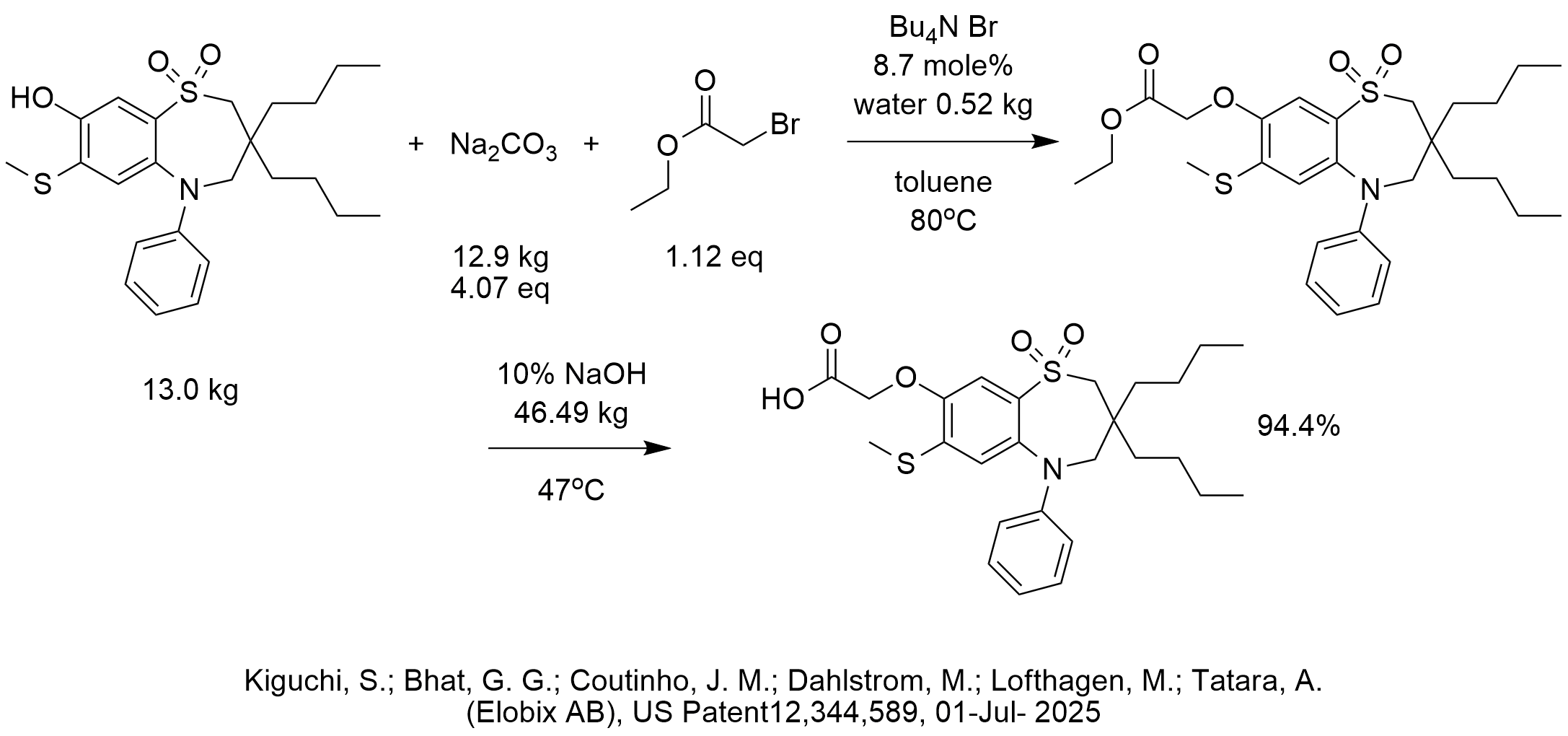
Example 1 in this patent serves as a reminder that phase-transfer catalysis is a workhorse for common straightforward reactions that need to be performed in high yield when working on pilot plant scale (or larger). The procedure also hints at the importance of choosing the right amount of water for a solid-liquid PTC reaction.
In this example, two consecutive PTC reactions are performed in high yield on a 13 kg scale without isolation of the intermediate.
The first reaction is a solid-liquid PTC etherification of a phenol with ethyl bromoacetate, using tetrabutylammonium bromide as the phase-transfer catalyst and sodium carbonate as the base. A small amount of water was added to the etherification reaction. The second step was hydrolysis using a large amount of 10% NaOH that obviously contains a lot of water and performed without isolating the ester intermediate.
One particularly interesting aspect of this solid-liquid PTC etherification was the use of a measured amount of water which in this specific case was 4.0% relative to sodium carbonate base (solid).
As we teach in our 2-day course, Industrial Phase-Transfer Catalysis, there is an optimal amount of water for most solid-liquid PTC systems that should be identified and used to achieve highest reactivity and sometimes highest selectivity. Depending on the specific solid salt being used and other factors, the optimal amount of water can be as low as a few ppm to as high as several tens of percent. In one solid-liquid PTC reaction described in the course, the optimal amount of water in an N-alkylation using potassium carbonate as base was 16 wt% relative to the potassium carbonate. As noted earlier, this particular reaction using sodium carbonate was reported at only one water level which was 4.0%.
It is not known if the inventors of US Patent 12,344,589 studied and optimized the water level for this system, but we speculate that that they were likely aware of the importance of choosing a specific amount of water given that they added 0.52 kg of water after adding 12.89 kg sodium carbonate.
The optimum amount of water for every solid-liquid PTC reaction is different and depends on multiple parameters including the identity of the reactants, especially the specific cation and anion of the salt and its morphology, as well as solvent, phase-transfer catalyst, possible co-catalyst, leaving group and other factors.
The magnitude of the sensitivity of solid-liquid PTC systems toward hydration, often in narrow a range, is often overlooked when developing and commercializing new solid-liquid PTC processes. I have seen commercial PTC processes that produced product for many years and those in charge of plant operations were not aware how far they were from higher profit due to reactivity and/or selectivity, sometimes because the optimum level of hydration is in a narrow range that could easily be missed during development and optimization.
When you are developing a solid-liquid PTC process or optimizing an existing solid-liquid PTC process, you can often improve your process performance AND save weeks or months of process R&D or process optimization time by working with Marc Halpern of PTC Organics to benefit from decades of highly specialized expertise in industrial solid-liquid PTC systems. The ROI on PTC Process Consulting is high when accounting for both more profitable PTC processes and not wasting constrained and expensive process R&D resources. Now contact Marc Halpern of PTC Organics if your company is developing, optimizing or considering developing a commercial process that uses or may use solid-liquid PTC conditions.
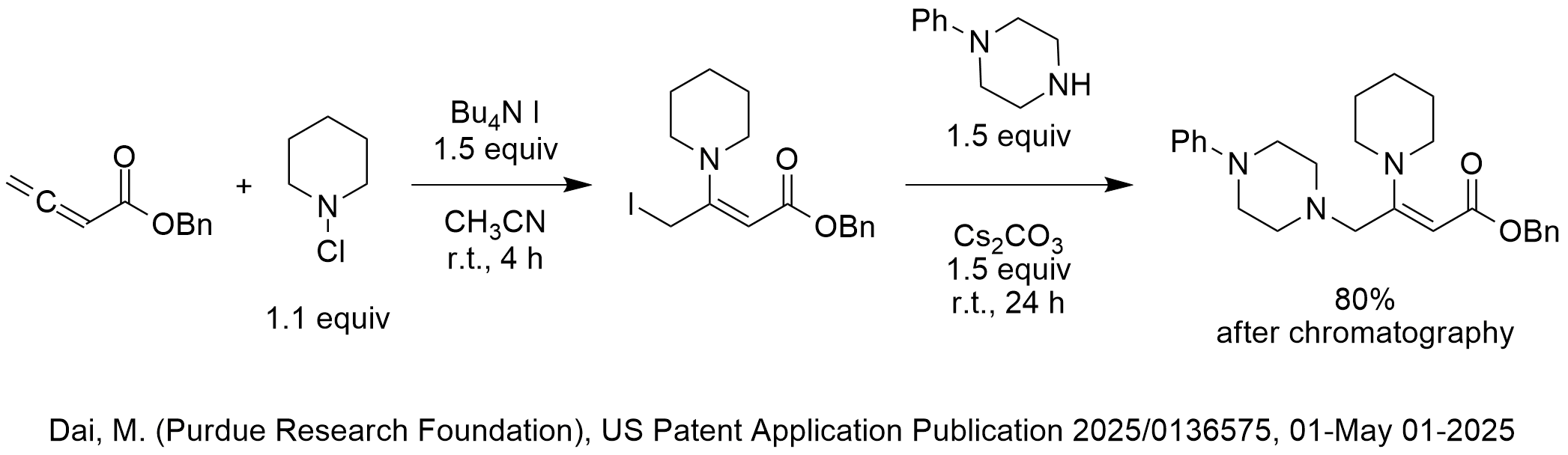
In the reaction shown in the diagram, tetrabutylammonium iodide was used as a reagent, not as a phase-transfer catalyst to form N-iodopiperdine from N-chloropiperidine. Iodopiperdine added across the terminal double bond of the allene. The second step was an N-alkylation with 1-phenylpiperazine reacting with the iodomethyl group.
The two reactions were performed in one pot without any workup (no isolation of intermediate), so the tetrabutylammonium cation was still present during the second step. It is possibly that the quat assisted the N-alkylation, though the activity of cesium carbonate in acetonitrile may have been sufficient without assistance of the quat.
Notably, without TBAI, the yield was lower than 5%. When amount of TBAI was reduced from 1.5 equiv. to 0.5 equiv., the yield dropped to 41%. This likely suggests that the iodide was crucial and not the tetrabutylammonium.
Cesium carbonate was superior to other bases including potassium carbonate. THF was less effective than acetonitrile as solvent.
In the reaction shown in the diagram, equimolar amounts of cannabidiol and terephthaloyl chloride in were reacted in methylene chloride as the solvent with 2.00 equiv NaOH and 0.6 mole% TBAB to produce the polyester in 95% yield after two crystallizations that had a molecular number of 47,000 and polydispersity index of 1.87. This is a classic example of a mild high yield PTC esterification of an acyl chloride with a phenol. The use of the exact amount of NaOH to deprotonate the phenolic OH’s obviously minimized hydrolysis of the acid chloride, aided by the very low heat history.
Two other phase-transfer catalysts were screened. Cetyl trimethyl ammonium bromide gave 92% yield, Mn = 25,100 and PDI of 2.3. Benzyl triethyl ammonium chloride gave 88% yield, Mn = 23,000 and PDI 2.1.
Polyesters produced from cannabinoid diols and aromatic bis-acyl chlorides (e.g., phthaloyl chloride) can serve as radical scavengers and anti-oxidants then can be biodegraded by hydrolysis. The antioxidant, biodegradability and mechanical properties of these commodity polyesters can be tunable by choosing different diacyl chlorides and cannabinoid diols.
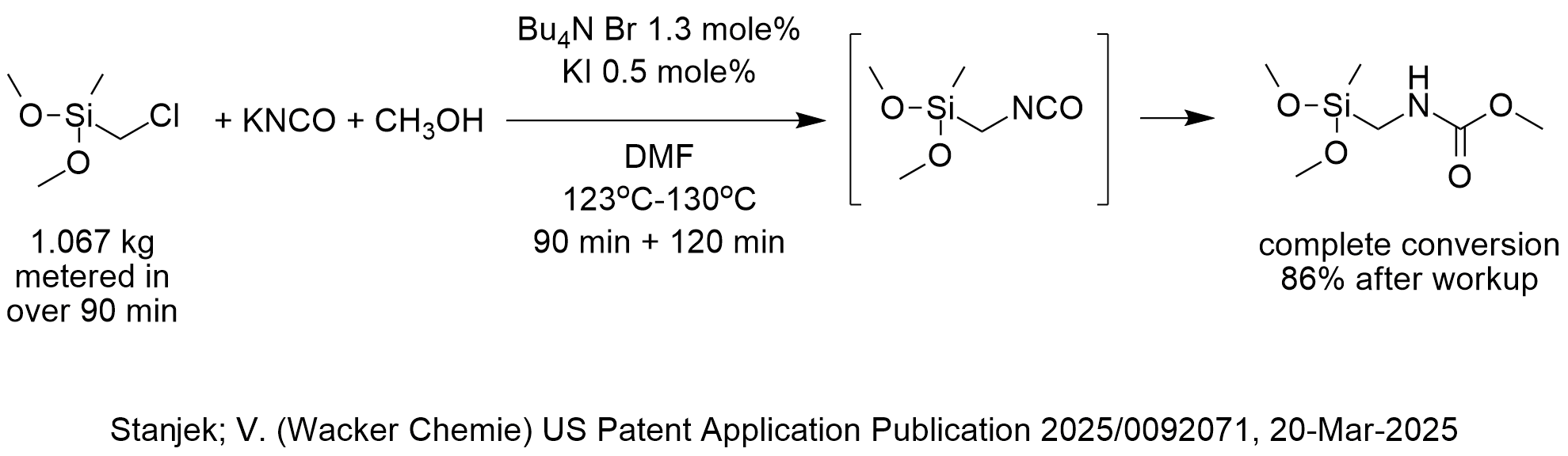
A solid-liquid PTC isocyanate reaction was successfully performed on a 1 kg scale using a water-sensitive silane.
As shown in the reaction diagram, 1.04 equivalents of potassium isocyanate were reacted with 1-chloromethyl-methyldimethoxysilane and methanol in DMF as the solvent. The phase-transfer catalyst was tetrabutylammonium bromide used at 1.3 mole% catalyst loading. Potassium iodide was used as a co-catalyst at 0.5 mole% to form in-situ the more reactive intermediate 1-iodomethyl-methyldimethoxysilane.
As we teach in our 2-day course “Industrial Phase-Transfer Catalysis,” since the quaternary ammonium phase-transfer catalyst transfers and activates both the isocyanate nucleophile and the iodide nucleophile, it is very important to use less than iodide than tetrabutylammonium in order to avoid catalyst poisoning. The potential for catalyst poisoning is high due the very high affinity of tetrabutylammonium to iodide relative to the affinity of tetrabutylammonium to isocyanate. We believe that is why the inventors used only 0.5 mole% KI in the presence of 1.3 mole% TBAB.
Methanol is used in this process as a reactant, not a solvent. Methanol reacts with the isocyanate intermediate to form the carbamate.
The conversion is more than 99.9% and the overall yield is 86% after removing the DMF solvent, excess reactant and byproduct by distillation (that also contained 5% of the product), then dissolution in toluene to facilitate flow during filtration of the solid salts, then additional extractions and final removal of toluene and other somewhat volatile compounds by distillation.
The low excess of only 4 mole% of isocyanate yet again demonstrates the high efficiency of PTC that reduces cost and improves environmental performance. The conversion was nearly quantitative and the yield loss may have been due to extensive processing during workup.
The purity after workup was 92.8%. When the reaction was repeated without PTC (Comparative Example V1a), the purity was lower at 85.7%.
We wonder if DMF could have been replaced by a more convenient lower boiling solvent (maybe xylene, b.p. 138 deg C) since PTC is able to transfer and activate isocyanate and iodide in solid-liquid PTC systems using a wide variety of solvents. The temperature of the reaction was maintained at 123 deg to 127 deg C for most of the reaction. Then again, the reaction temperature was determined by the azeotrope reflux temperature of DMF with methanol, so maybe there was little flexibility in choosing the solvent.
If you want to benefit from 49 years of highly specialized expertise of Dr. Marc Halpern in industrial phase-transfer catalysis, now contact Dr. Halpern to explore PTC Process Consulting or Industrial PTC training at your company.
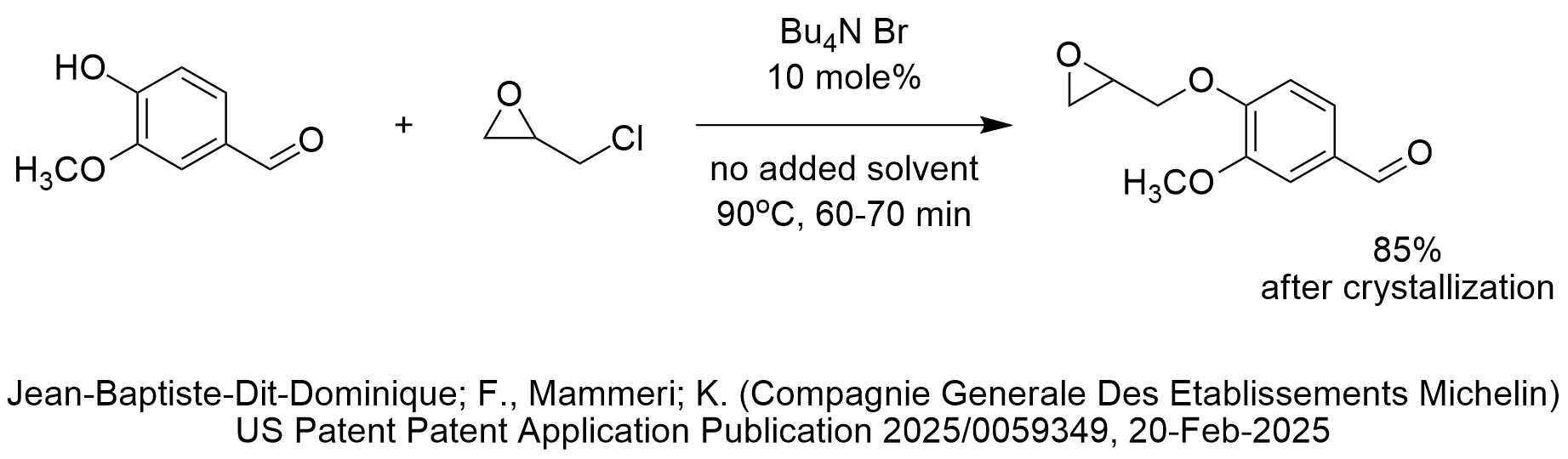
A very simple procedure was reported this month for the etherification of the phenolic O-H of vanillin with epichlorohydrin without using base.
The reaction was performed using excess epichlorohydrin as the solvent that apparently could be recovered by distillation during work up.
The reaction appears to start as a homogeneous solution in which vanillin, excess epichlorohydrin and 10 mole% tetrabutylammonium bromide are mixed and dissolved.
The etherification is initiated by bromide that is solubilized in the reaction medium by the TBAB. The bromide attacks the epoxide to open the ring and presumably forms the bromohydrin which reacts with the phenolic O-H of vanillin, liberating the bromide for another catalytic cycle.
TBAB is not acting as a phase-transfer catalyst, it is simply a source of organic-soluble bromide catalyst.
The reaction generates chloride leaving group that apparently forms HCl. So, no salt byproduct is generated.
The reaction takes only about an hour at 90 deg C.
Workup is easy by dilution with ethyl acetate and washing with brine followed by washing with distilled water and drying. The organic phase is distilled to produce an oil that is triturated with cold isopropyl alcohol that causes rapid crystallization of the product.
The yield is 85% after crystallization with purity “greater than 90%.”
The results show that there is no need to neutralize the phenol with base that would produce salt as waste and could result in several potential undesired side reactions.
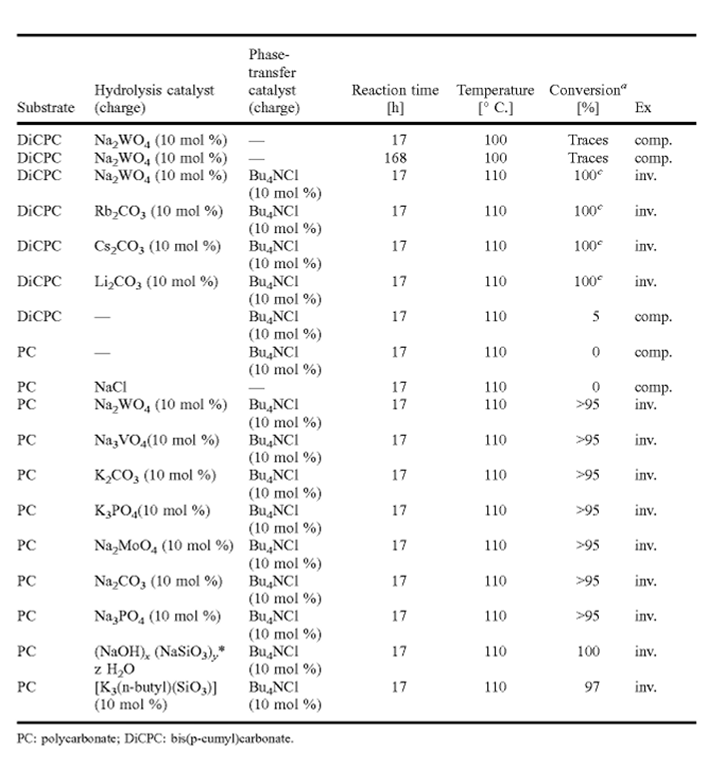
A US patent application publication [Leven; M., Heinz; N., Langanke; J., Heinemann; T., Laemmerhold; K., Tabak; M., Nalbantoglu; T., Leitner; W. (Covestro Deutschland) US Patent Application Publication 2025/0019514, 16-Jan-2025] was published that describes regenerating bisphenol A from used polycarbonates. The bisphenol A is reclaimed after hydrolytic cleavage of the carbonate group by water The inventors write “It thus avoids a loss of such raw materials, such as would arise in the event of disposal by incineration or landfill for instance.”
A hydrolysis catalyst is used that consists of two components [1] a phase-transfer catalyst and [2] a salt of an oxyacid that is interestingly defined as of an element of the fifth, sixth, fourteenth or fifteenth group of the periodic table of the elements.
As shown in the table, the phase-transfer catalyst that was screened was tetrabutylammonium chloride.
The salts of the oxyacids screened were alkali metal carbonates, phosphates, silicates, tungstates, molybdates and vanadates.
A key finding when examining the 12 inventive examples and the 5 comparative examples is that high conversion of more than 95% requires BOTH a phase-transfer catalyst and a salt of the oxyacid.
Editor note: The subscripts a and c shown in the table are not explained in the publication.
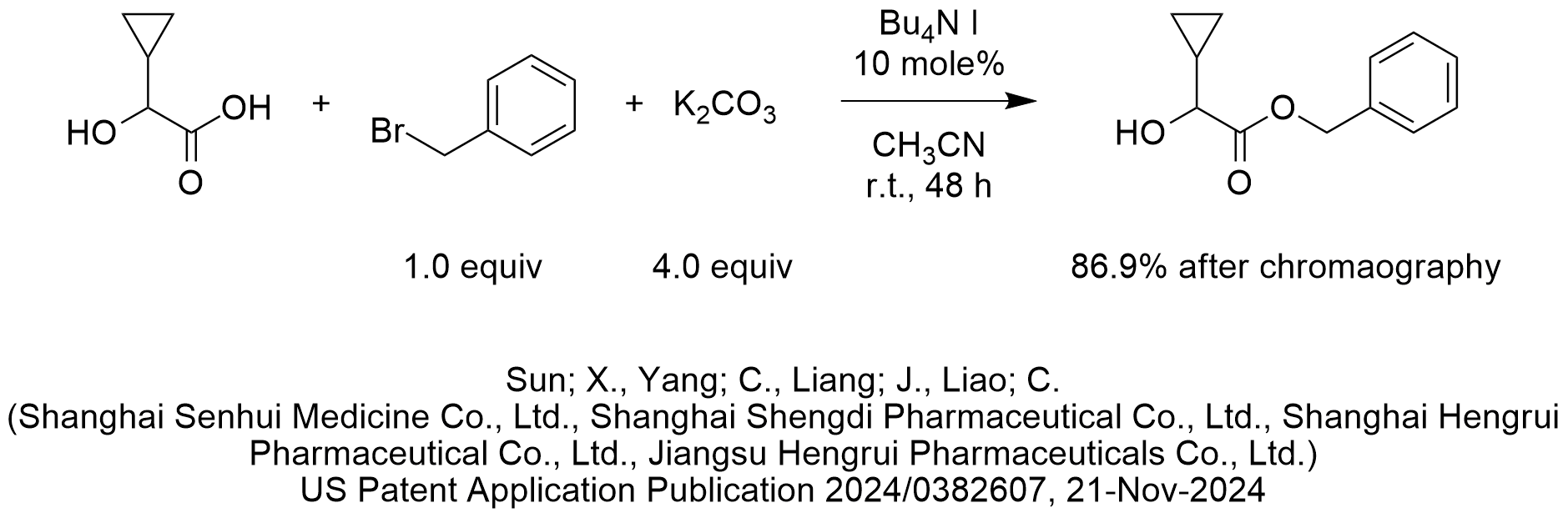
We commend the inventors for recognizing that phase-transfer catalysis excels in performing specialty esterifications. We further commend the inventors for recognizing that solid-liquid PTC conditions are most likely to provide good results for the reaction shown in the diagram.
PTC esterifications are often performed at temperatures significantly higher than room temperature and one of the techniques to reduce the temperature is to use PTC-iodide co-catalysis. The inventors chose tetrabutylammonium iodide as the phase-transfer catalyst and this is a very reasonable choice that was likely crucial to achieve high conversion at room temperature.
However, if this reaction would progress to scale up, we would change a few of the process parameters chosen.
First, we would not choose acetonitrile as the solvent. We would choose a less polar solvent that is immiscible with water to facilitate workup on a large scale.
Secondly, we would choose to use a phase-transfer catalyst that is much less expensive than tetrabutylammonium iodide, such as tetrabutylammonium bromide and combine it with a small amount of potassium iodide. The combination of TBAB/KI is usually much less expensive than purchasing TBAI itself and this combination functions just as well as TBAI due to the much higher affinity of quat cations for iodide versus bromide, usually by more than an order of magnitude. We teach this in the 2-day course “Industrial Phase-Transfer Catalysis.” Has your company brought this course in-house in the last decade? If not, click here.
Thirdly, we expect that optimization studies would show that the amount of TBAB/KI could be greatly reduced from 10 mole% catalyst loading, perhaps down to 0.5 mole% to 2 mole%.
Now contact Marc Halpern of PTC Organics when you need to achieve the highest performance of your PTC process while minimizing your process R&D development time and cost.
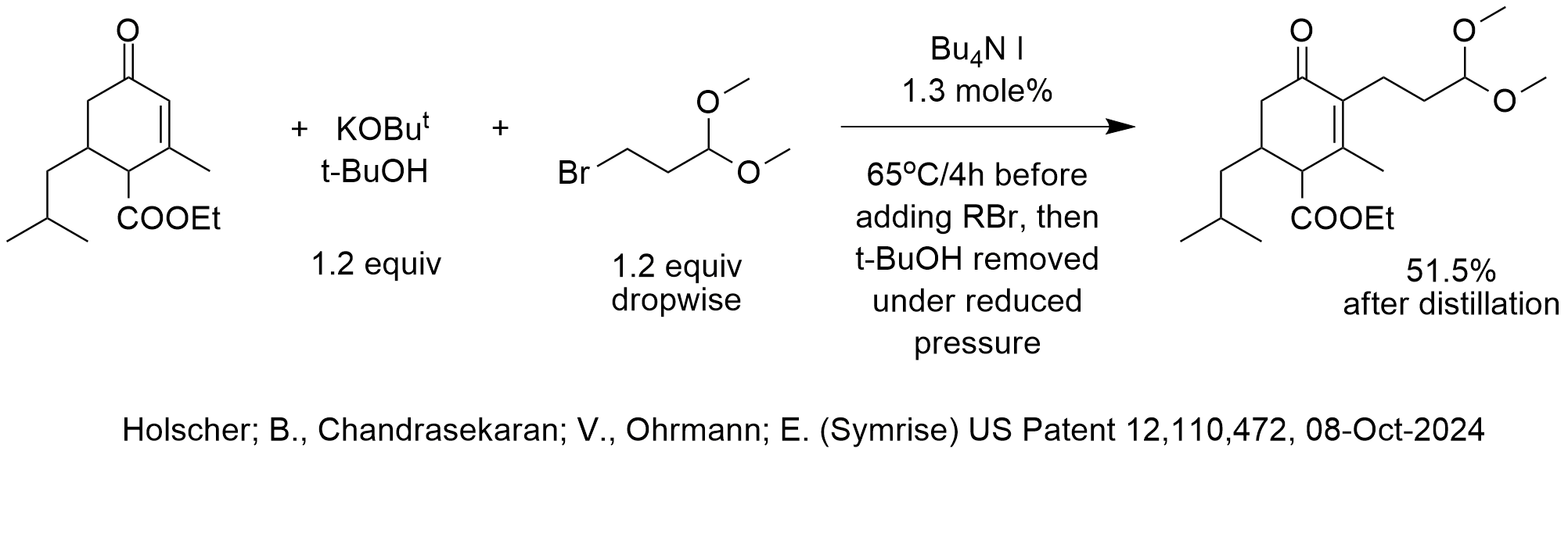
Tetrabutylammonium iodide is used to catalyze the C-alkylation of a substituted cyclohexanone shown in the diagram.
It is reasonable to assume that the role of the iodide is to form in situ the more reactive 3-iodo-1,1-dimethoxypropane from the bromo derivative.
It is also reasonable to assume that t-butoxide was chosen as the base to avoid hydrolysis of the ester if a base such as NaOH would have been used. The pKa of the methylene alpha to the carbonyl being deprotonated should be within the range of 16-23 for which PTC-NaOH reactions excel. This is taught in the 2-day course “Industrial Phase-Transfer Catalysis.”
Since the reaction is performed in t-butanol, it is likely that the tetrabutyl ammonium iodide is simply a source of soluble iodide and not an actual phase-transfer catalyst from a mechanistic standpoint, since the reactants are likely soluble in t-butanol.
One interesting aspect of the procedure is that the cyclohexanone substrate, the t-butoxide in t-butanol and the tetrabutylammonium iodide were mixed for hours with heating before starting to add the 3-bromo-1,1-dimethoxypropane. This is curious since the acid-base neutralization should be instantaneous and there would be no need for the tetrabutylammonium iodide to be present for the neutralization.
In fact, the more that the tetrabutylammonium cation is needlessly exposed to strong base and heat, the higher the probability of experiencing Hofmann Elimination that decomposes the quat cation. Then again, the reaction appears to proceed in the presence of only 1.3% quat iodide. So, maybe the quat survives this heat history.
We do not know if the 51.5% isolated yield is due to taking a high quality distillation cut or if the conversion was low. If the conversion was low, it would be worthwhile to observe whether the quat cation decomposed during the exposure to the butoxide base which doesn’t have a readily apparent reason for being present during the 4 hours of heat history.
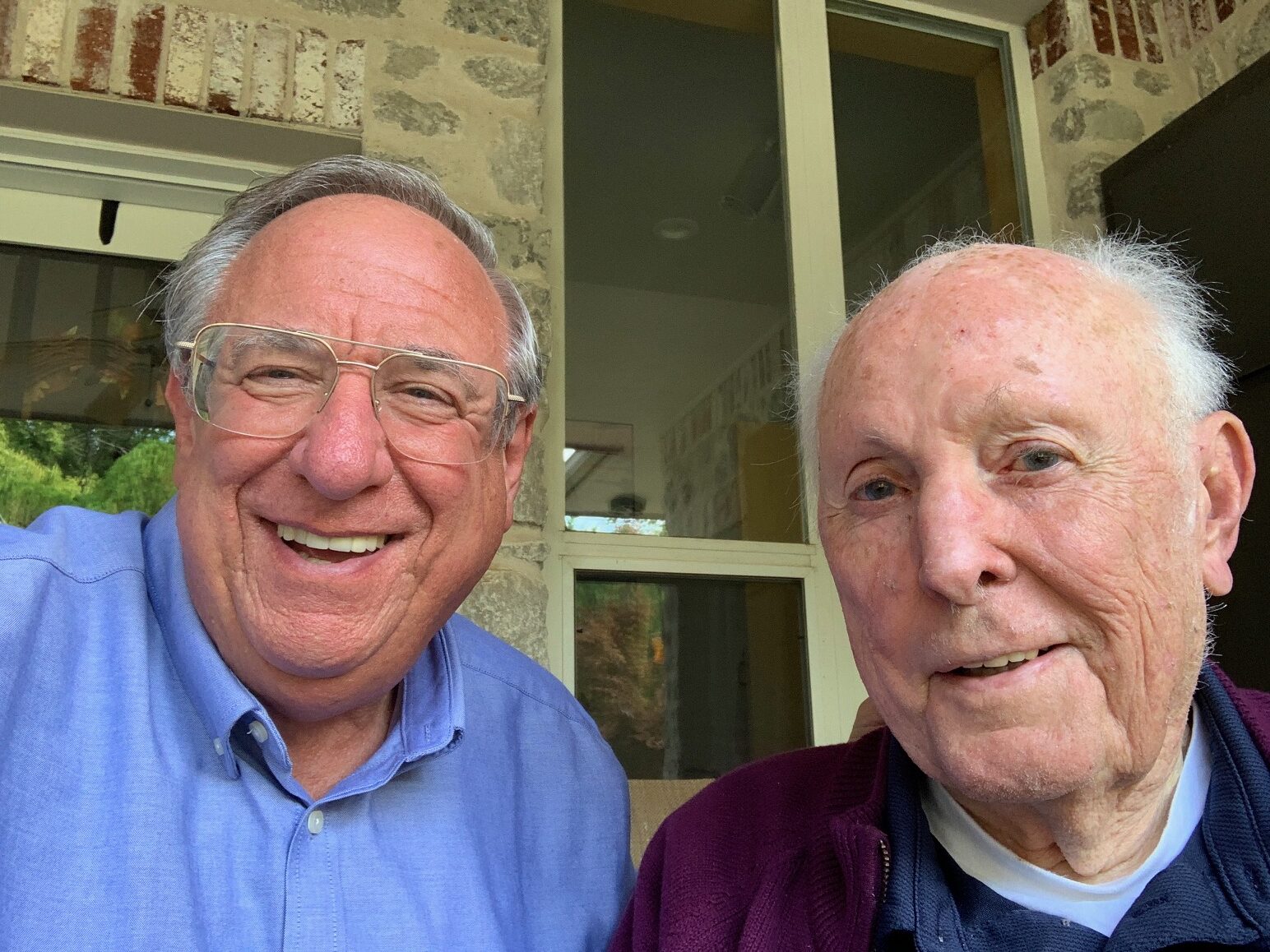
A celebration was held in Ponca City, Oklahoma for the 90th birthday of Charles Starks and his wife Virginia Starks. I (Marc Halpern) interviewed Dr. Starks in his home and he shared many interesting perspectives on the history of phase-transfer catalysis.
As many of you know, Dr. Starks is the inventor of the classical extraction mechanism that serves as the basis for understanding PTC applications and predicting the kinetics for most PTC reactions.
The interview was conducted in the Starks’ garden outdoors, so you will hear in the audio recording sounds of birds and insects. Please do not be distracted by these sounds.
Surprising fact disclosed in this interview: If scientists in the early 1960’s didn’t believe that the world would run out of food, Dr. Starks may not have embarked on the path to find an alternative to oils that served as the basis for soaps that may have been needed to feed people, that eventually led to the discovery of phase-transfer catalysis. The details are fascinating including the objections reviewers had to the original classical 1971 PTC publication.
Following are the intro and questions in this interview.
I have the amazing honor and privilege to be in Ponca City, OK to celebrate the 90th birthday of Dr. Charles Starks, the inventor of the extraction mechanism and the man who coined the term phase-transfer catalysis. Thank you for hosting me in your home.
I’m 70 years old and I fell in love with PTC 48 years ago, the moment I read your landmark publication 5 years after it was published in 1971. I want to thank you for your personal mentorship and more importantly I want to thank you on behalf of the scientific community for the immeasurable positive impact you made on achieving low-cost high-performance green chemistry for thousands of commercial processes.
I would like to ask a few questions for historical perspective.
How did you come up with the extraction mechanism? Was it driven by your need to understand a specific reaction? Did it come to you in a dream? How did you figure it out?
Did your bosses want to keep the extraction mechanism of PTC a secret or did they readily agree to patent it?
Several years passed between your landmark initial publication of PTC and the issuance of your landmark broad scope patent in 1976. Do you recall the objections of the patent office?
When you coined the term phase-transfer catalysis, how long did it take to realize that it would revolutionize cost reductions, environmental performance, process safety and other extraordinary benefits to the chemical industry?
Today, PTC is being used in an amazingly wide array of segments of the chemical industry including polymers, monomers, pharmaceuticals, agrochemicals, petrochemicals, flavors & fragrances, dyes & pigments, solvents, explosives, medicine devices, surfactants and other commodity, specialty and fine organic chemicals? Do you recall which industries did PTC affect first and how it caught on?
What were the barriers to faster and more widespread adoption of PTC? Resistance to change?
Are you surprised that new PTC applications continue to be developed 53 years after you coined the term phase-transfer catalysis?
What do you think was the biggest global impact of phase-transfer catalysis on the chemical industry and the world? Positive environmental impact through emissions reduction, reducing excess reactants, replacing hard to recover solvents such as DMSO? Safety by reducing hazardous materials such as phosgene, cyanide and hydrogen generation when producing alkoxides?
You’re a humble man. How did the breakthrough discovery of PTC not go to your head?
What did you enjoy more, achieving breakthroughs, managing people who achieved breakthroughs or something else?
What was the #1 lesson you learned from your experiences from process chemist to senior executive in the chemical industry?
What advice would you give to chemists starting their career?
As you know, PTC has been my full-time entrepreneurial business since 1995, soon to be 30 years.
When you and Charles Liotta accepted me as your junior collaborator in 1987, you totally changed my life for decades. There are no words to express the depth of gratitude I feel toward you and Charles Liotta for accepting me and mentoring me at the most crucial fork in my career path.
We use cookies to ensure that we give you the best experience on our website. If you continue to use this site we will assume that you are happy with it.Ok