The Industrial Phase-Transfer Catalysis Experts

PTC Tip of the Month E-Newsletter

50 Year Anniversary of Marc Halpern’s First PTC Reaction – Funny Story

I fell in love with phase-transfer catalysis on my first PTC reaction exactly 50 years ago!

In this video, that is sometimes funny, I describe:

  1. how I thought I broke the department’s primary NMR machine
  2. how easy it is to perform deuterium-hydrogen exchange in fluorene
  3. how get a free PTC opportunity evaluation
  4. historical pictures of the leaders of PTC
  5. changes to the PTC Newsletter starting in summer 2026


PTC for Thiocyanate Reactions

As we teach in our 2-day course “Industrial Phase-Transfer Catalysis,” the thiocyanate anion has one of the highest selective affinities for quat cation out of more than 20 common inorganic anionic nucleophiles, oxidants and reductants. For that reason, whenever you need to react thiocyanate, you should almost certainly consider PTC for your process.

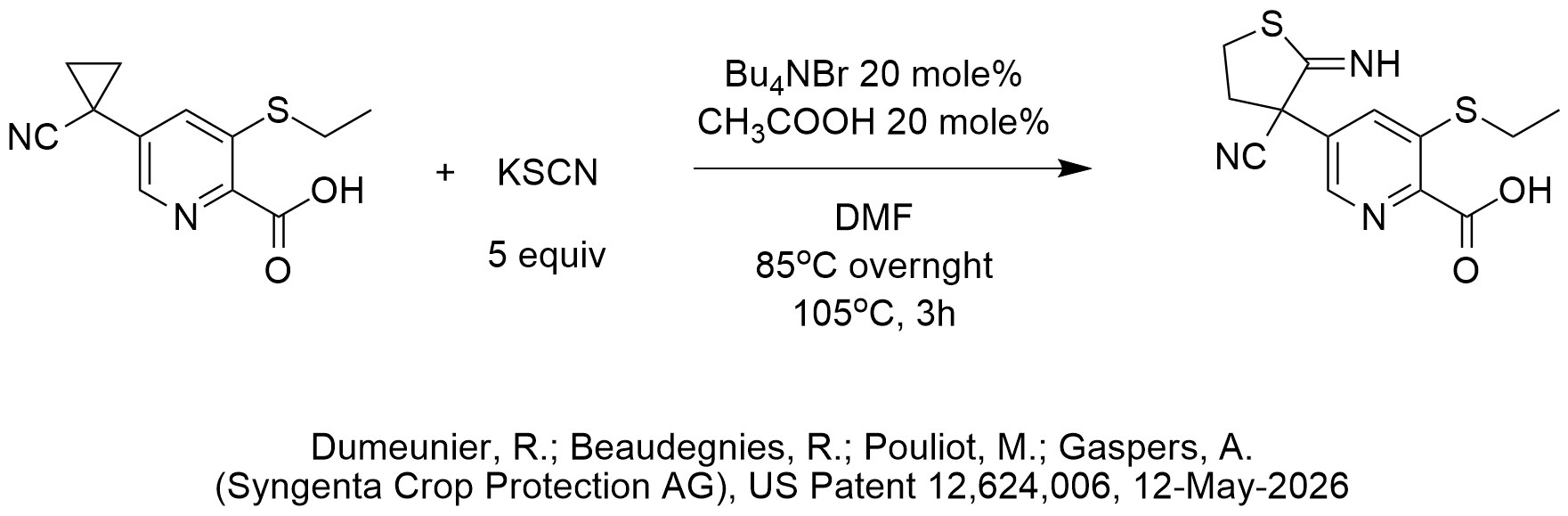
The reaction shown in the diagram uses thiocyanate as a reactant we commend the inventors for using PTC. Potassium thiocyanate provides SCN⁻, which opens the strained cyclopropane under acidic, high-temperature polar conditions. The resulting sulfur/nitrile-containing intermediate then cyclizes to a 2-imino-tetrahydrothiophene ring.

This appears to be a solid-liquid PTC system. Solid-liquid PTC is a successful method for many PTC systems using inorganic anionic nucleophiles.  However, we question the use of DMF as the solvent. In this case, TBAB generates the organophilic tetrabutylammonium thiocyanate ion pair in situ. A process chemist should then ask whether DMF is truly required, or whether an appropriate quaternary ammonium catalyst could enable the reaction in solvents that enable easier workup such as toluene, MIBK, 2-MeTHF, CPME, ethyl acetate, isopropyl acetate, or another more process-acceptable solvent that will solubilize the product.

There is likely room for other process improvements such as reducing the excess thiocyanate, better choice of phase-transfer catalyst, reducing the catalyst loading and others. However, the purpose of this reaction was to produce samples as standards, not to develop an economical process. So, we do not fault the inventors for choosing less than optimal conditions.

By the way, in case you were wondering about pKa’s (like I was), the pKa of HSCN is about -1, the pKa of pyridine carboxylic acid is about 1-2 and the pKa of acetic acid is about 4.8. Therefore, the thiocyanate anion remains predominantly in the anionic form even under the seemingly acidic conditions described in the procedure under which both carboxylic acids remain protonated.

The “60-Second PTC Test” to Identify Processes That Could Deliver 10–30% Cost Reduction Using Phase-Transfer Catalysis

The 60-Second PTC Test for Low-Cost, High-Performance Green Chemistry

Summary

How can you quickly determine whether an existing process, or a process under development, could benefit from phase-transfer catalysis and potentially deliver 10 to 30% cost reduction?

The first screen is surprisingly simple. A process should be considered a candidate for phase-transfer catalysis if it meets two criteria. First, the process requires one or more performance improvements that phase-transfer catalysis is capable of providing. Second, the chemistry falls within the scope of reaction categories that are commonly amenable to phase-transfer catalysis.

If a process meets both criteria, it deserves serious consideration as a PTC candidate.

This does not mean that PTC will definitely work. It means that the opportunity is strong enough to justify a more detailed technical evaluation and, in many cases, investment of R&D resources that may provide a substantial return through lower cost of manufacture, higher productivity, improved selectivity, reduced waste, safer operation, or simplified workup.

Chemical manufacturers are under continuous pressure to reduce cost of manufacture, improve productivity, reduce waste, simplify operations, and get more value from both R&D and plant assets. A process improvement does not have to be exotic to be valuable. A modest improvement in yield, cycle time, reagent charge, solvent handling, reaction selectivity, or workup can have a significant economic impact when applied to a commercial or late-stage development process.

The purpose of the 60-Second PTC Test is to help process chemists, plant support chemists, process engineers, and technical managers quickly identify reactions where phase-transfer catalysis may provide meaningful cost reduction and process performance improvement.

Why This Test Is Needed

Many companies do not miss PTC opportunities because PTC was evaluated and rejected. They miss PTC opportunities because PTC was never seriously considered.

This happens frequently when a process is already “acceptable.” The reaction works. The product can be made. The plant can run. The development group has moved on. However, acceptable is not the same as optimized. At commercial scale, the difference between an acceptable process and a more highly optimized process can be economically significant, sometimes representing hundreds of thousands or even millions of dollars in annual value.

Many existing and developing processes still operate with lower yield than desired, excessive reaction time, excess reactants, expensive or hazardous strong bases, difficult solvent systems, avoidable waste streams, reaction selectivity limitations, difficult workups, or limited reactor productivity. In many cases, these limitations are not fundamental. They may simply reflect the fact that the reaction was never properly evaluated under PTC conditions.

The 60-Second PTC Test provides a fast way to identify those opportunities.

The 60-Second Phase-Transfer Catalysis Test

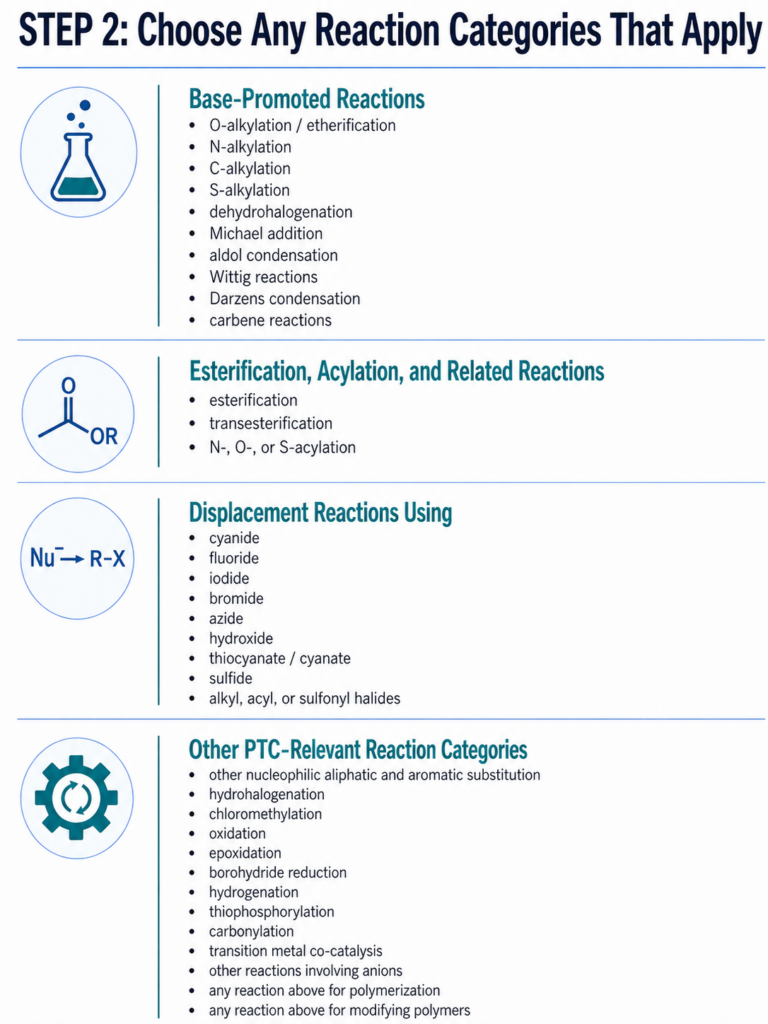
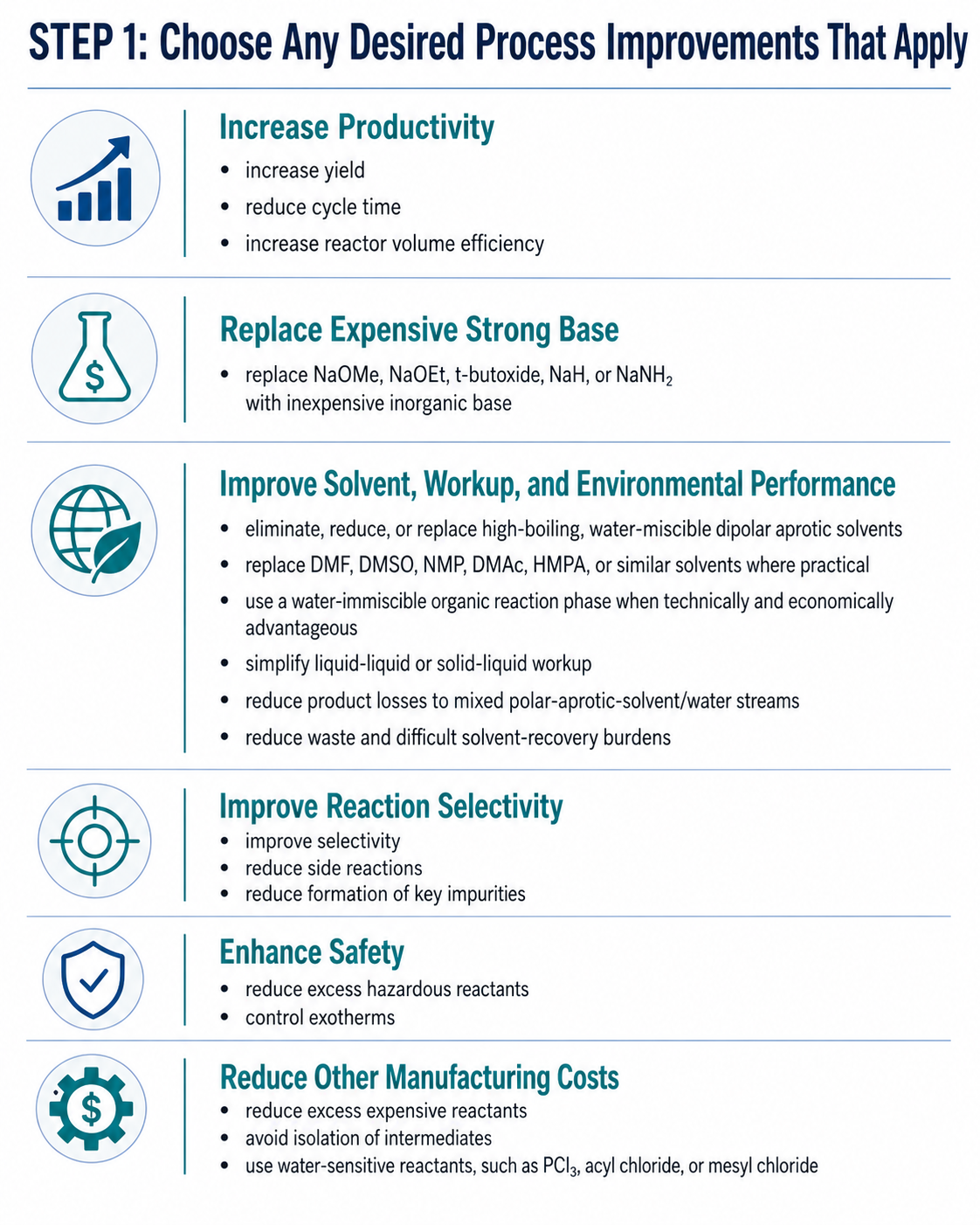
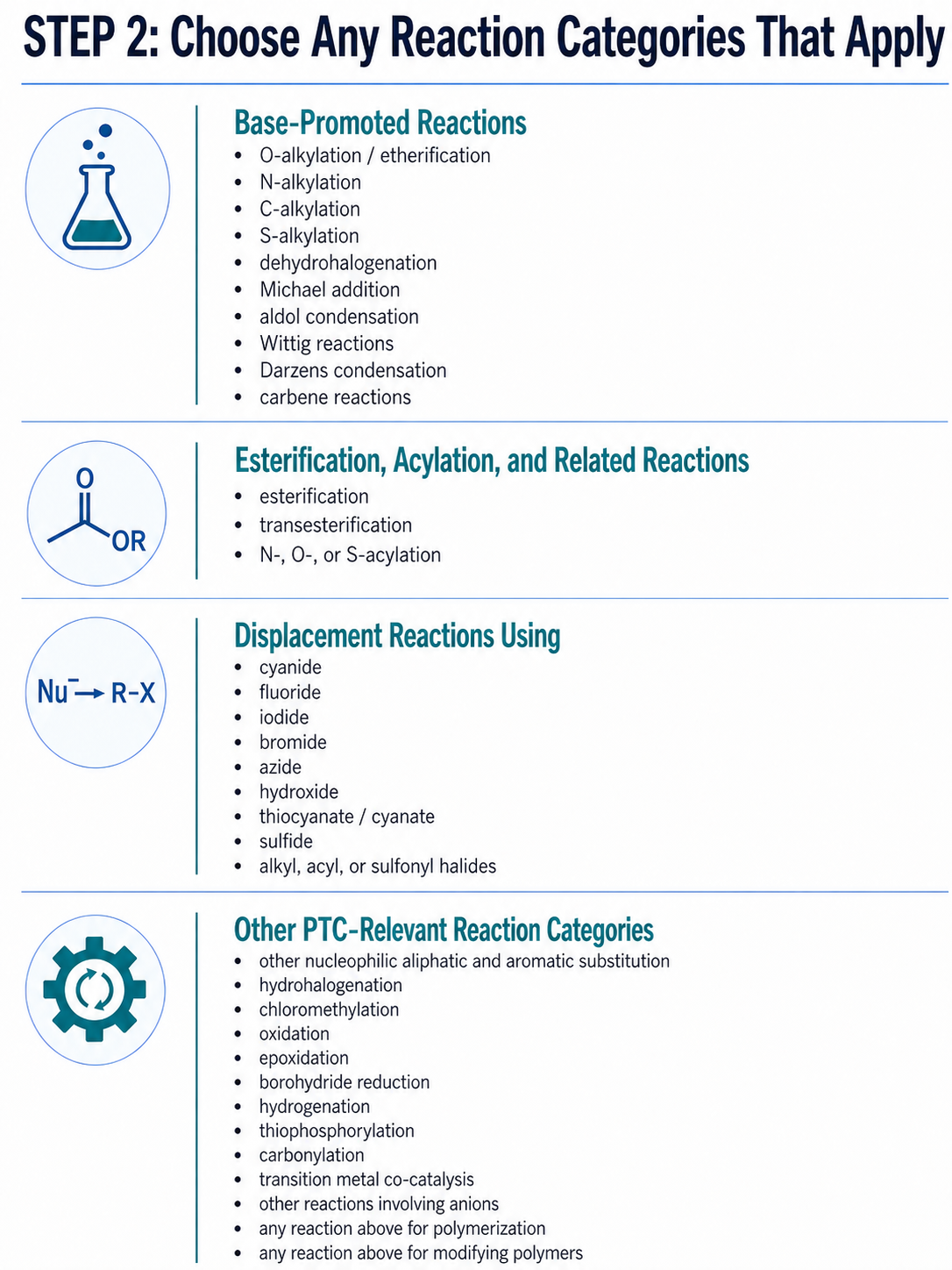
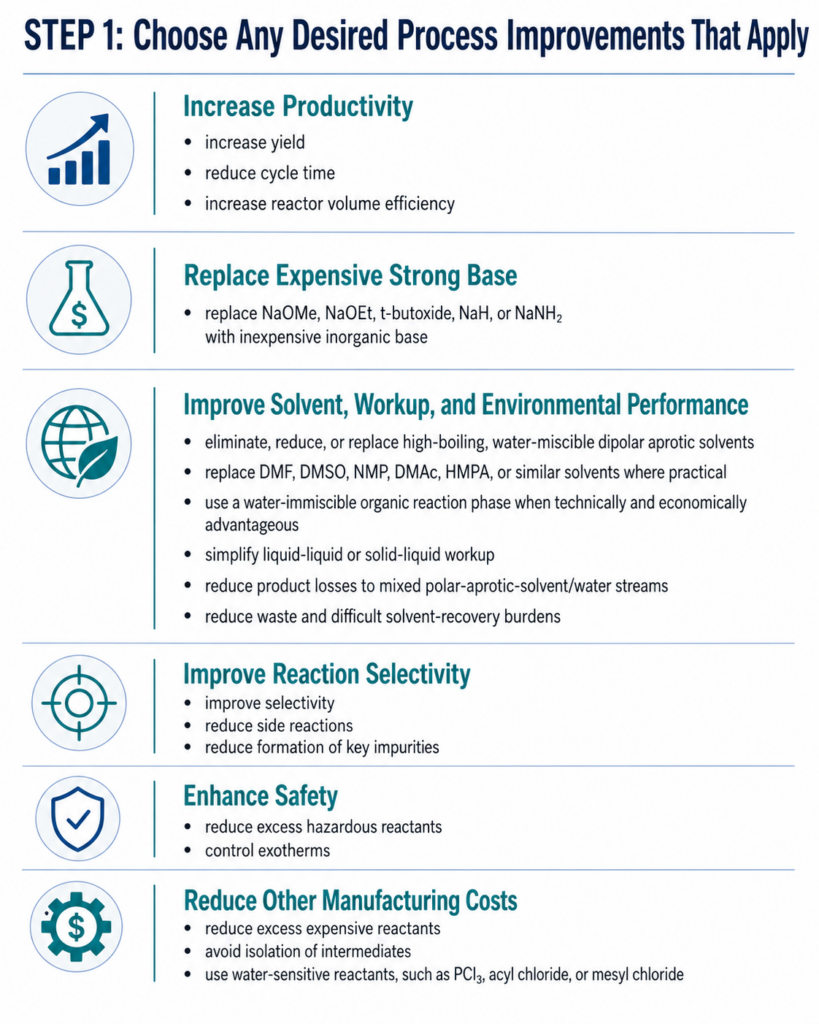
Here is the very simple test! Does your existing plant process, or process in development, meet one or more of the criteria in Step 1? If so, does your existing plant process, or process in development, meet one or more of the criteria in Step 2?

What should you do right now in the next 60 seconds?

Think of the process that you are developing right now or are supporting in production right now. Then read the list of benefits in Step 1 and the list of reactions in Step 2. That should take you 60 seconds or less. Very simply put, if your process would benefit from any of the performance improvements in Step 1 and involves a reaction listed in Step 2, then phase-transfer catalysis should be considered as a process improvement option.

Then go to Step 3 to interpret the result.
STEP 3: Interpret the Result

If your new or existing process could benefit from at least one desired process improvement listed in Step 1, and includes at least one reaction listed in Step 2, then the process should be treated as a serious candidate for phase-transfer catalysis evaluation.

This does not mean that PTC will definitely work. It means that the reaction has the right combination of process need, reaction type, and potential economic value to justify further technical evaluation.

The practical question is not whether PTC can improve every reaction. It cannot. The practical question is whether this specific reaction has a high, medium, or low probability of achieving specific process targets using PTC.

That is the question to be answered next.

The 60-Second PTC Test is a screening tool. It provides a practical way to identify reactions where PTC evaluation is technically justified. That is valuable because many companies never reach that point. They do not reject PTC after proper evaluation. They miss the opportunity because PTC is never seriously considered.

Why Step 1 Is Not a Gimmick

Some chemists may look at Step 1 and say, “Of course we want increased yield, reduced cycle time, better selectivity, lower solvent use, safer conditions, and lower manufacturing cost. Everyone wants those things.”

That is exactly the point.

Step 1 is not a gimmick. It identifies the process performance improvements that often create the economic justification for evaluating PTC. The relevant question is not whether these improvements are desirable. They obviously are. The relevant question is whether phase-transfer catalysis is a practical way to achieve one or more of these improvements in a specific reaction.

In many cases, PTC can provide process benefits by changing the reaction environment rather than merely adjusting temperature, concentration, solvent, or reaction time within the same conventional process framework. For example, PTC may enable the use of inexpensive inorganic bases such as NaOH or K₂CO₃ instead of more expensive or hazardous strong bases. It may reduce reagent excess, improve reaction selectivity, suppress side reactions, shorten cycle time, or reduce waste.

PTC can also improve the practical process aspects surrounding the reaction. When the product remains in a water-immiscible organic phase and inorganic salts remain in an aqueous phase or as separable solids, the workup can often be simplified. This can be especially valuable when PTC allows replacement of high-boiling, water-miscible polar aprotic solvents such as DMF, DMSO, NMP, DMAc, or HMPA with solvents that are less expensive, much easier to recover and often don’t need special processing such as drying. The opportunity is to avoid difficult polar-aprotic-solvent/water systems when a practical two-phase or multiphase PTC process can deliver better reaction and process performance.

Each of these improvements can be economically meaningful. Several of them occurring together can be decisive.

Why Step 2 Is Not a Gimmick

Step 2 is also not a gimmick. It is a practical list of reaction categories where PTC has repeatedly shown value in industrial organic chemistry and polymer chemistry.

Step 2 does not claim that all organic chemistry is suitable for PTC. Most organic reactions are not amenable to PTC improvement. But the list of reactions in Step 2 represents thousands of reactions that are commonly performed in many organic chemical industries including pharmaceuticals, agricultural chemicals, flavor & fragrances, monomers, polymers and a wide variety of commodity, specialty and fine organic chemicals.

PTC is most powerful when the reaction involves anions, nucleophiles, base-promoted transformations, ion pairs, reactions across phase boundaries, poorly soluble inorganic reagents, opportunities to replace strong base with inorganic base, or reaction systems where phase behavior can be used advantageously.

This is why Step 2 is so useful. It allows the process chemist to quickly recognize whether the current reaction belongs to a family of reactions where PTC should at least be considered.

From the 60-Second Test to a PTC Process Opportunity Screening

If a reaction passes the 60-Second PTC Test, the next step is to determine whether PTC has a high, medium, or low probability of achieving the specific process target. This is done by submitting your opportunity to Marc Halpern of PTC Organics Inc. who has five decades of experience in PTC, of which more than four decades are in industrial PTC.

The estimate of probability-of-success for an opportunity requires more than a generic reaction category. For a meaningful estimate, PTC Organics usually needs to review the actual substrate structure, actual product structure, current reagents and molar ratios, solvent, base, catalyst if any, reaction time, temperature, yield, key impurities or side reactions, workup or isolation issues, current process limitations, and specific measurable performance targets.

In most cases, the identities of the actual molecules are crucial and “R-groups” are not specific enough to estimate a probability of success. Generic functional group descriptions may be useful for very preliminary discussion, but they are usually not sufficient for a reasonable probability-of-success estimate.

For that reason, if the reaction is confidential, the appropriate first step is to request an NDA.

Do not submit proprietary information unless an NDA is already in place.

Free Initial PTC Probability-of-Success Screen


How the Screen Improves Process R&D Efficiency

For process R&D managers, the value of the PTC Process Opportunity Screening Form is not limited to identifying good PTC candidates. It can also improve R&D efficiency by helping teams decide which opportunities deserve laboratory resources and which do not.

A process R&D group may have many possible reactions that could theoretically be evaluated using PTC. However, not every opportunity deserves the same level of effort. Some reactions may have a high probability of achieving a valuable performance target. Others may have only a low probability of success, or the possible economic benefit may not justify the required development work.

A PTC probability-of-success screen can help a technical team prioritize projects before investing weeks or months of laboratory effort. In some cases, one day of expert review can help a company sort through many possible PTC opportunities and decide which projects deserve immediate attention, which should be deferred, and which should not be pursued.

That is one of the practical benefits of the 60-Second PTC Test and the PTC Process Opportunity Screening Form. They help convert a long list of possible process improvement ideas into a more focused set of PTC candidates for internal technical and economic review.

PTC Organics offers one free initial PTC probability-of-success screen per company for qualified submissions.

The most useful submissions define the desired improvement numerically, such as:

  • increasing yield from 85% to at least 92%
  • reducing reaction time from 48 hours to 24 hours
  • reducing reaction time from 48 hours to less than one 8-hour shift
  • replacing NaH with NaOH or K₂CO₃
  • reducing excess alkylating agent from 2.0 equivalents to 1.2 equivalents
  • replacing DMF, DMSO, NMP, DMAc, or HMPA with a more practical solvent where technically feasible
  • reducing a specific impurity from 4% to below 1%
  • improving selectivity from 85:15 to at least 95:5
  • avoiding isolation of an intermediate

Vague targets such as “increase yield,” “reduce cycle time,” “reduce cost,” “make the process greener,” or “as much as possible” are not sufficient for a meaningful probability-of-success estimate, because different targets can have very different probabilities of success.

The purpose of the initial screen is to answer one practical question:

Does this reaction justify further PTC evaluation for the specific performance target provided?

The free initial screen does not include a full development plan, literature review, patent analysis, experimental program, process safety review, or guarantee of commercial success. Those items may be addressed in a paid consulting engagement if the opportunity warrants further work.

At the same time, the decision whether to pursue, defer, or reject any PTC opportunity remains entirely the responsibility of the company’s management. The free initial PTC probability-of-success screen is an aid to internal decision-making. It is not a recommendation to proceed, not a substitute for the company’s own technical, safety, regulatory, economic, intellectual property, and management review, and not a guarantee that any specific performance target will be achieved.

That said, the free initial screen can be valuable when deciding whether or not to invest constrained process R&D resources to evaluate the PTC process option. Think of the fully absorbed cost of one month of process R&D. Compared with that cost, the time required to complete a PTC Process Opportunity Screening Form is small. If a free initial probability-of-success screen helps you avoid a low-probability project or identify a high-probability PTC opportunity, it could be a costly mistake not to take advantage of it.

Why Specific Performance Targets Are Essential

The estimate of probability of success is not meaningful unless the target is specific.

For example, suppose a process currently gives an 85% yield. The question “Can PTC increase the yield?” is not specific enough. A more useful question is: “What is the probability that PTC can increase isolated yield from 85% to at least 92% while reducing formation of a key impurity?”

That is a real process target.

It is also very different from asking whether PTC can increase yield from 85% to 99%. The first target of 92% yield may have a high or medium probability of success. The second target of 99% may have a much lower probability of success for the same reaction.

The same logic applies to reaction time. If a reaction currently requires 48 hours, the statement “We want to reduce reaction time as much as possible” is not sufficient. More useful targets would be:

  • reduce reaction time from 48 hours to 24 hours
  • reduce reaction time from 48 hours to less than one 8-hour shift
  • reduce reaction time from 48 hours to 48 minutes

These are completely different technical objectives. The probability of success may be high for the first, medium for the second, and low for the third.

The performance target must be defined before the probability of success can be estimated.

This discipline is important because companies do not need theoretical improvement. They need improvements that justify action. A yield increase from 85% to 92% may be economically compelling. A reaction time reduction from 48 hours to 24 hours may remove a plant bottleneck. Replacing NaH with NaOH or K₂CO₃ may reduce cost, simplify handling, and improve safety. Replacing DMF with a water-immiscible solvent may simplify workup and reduce solvent-recovery burden.

These are not vague goals. They are measurable process targets.


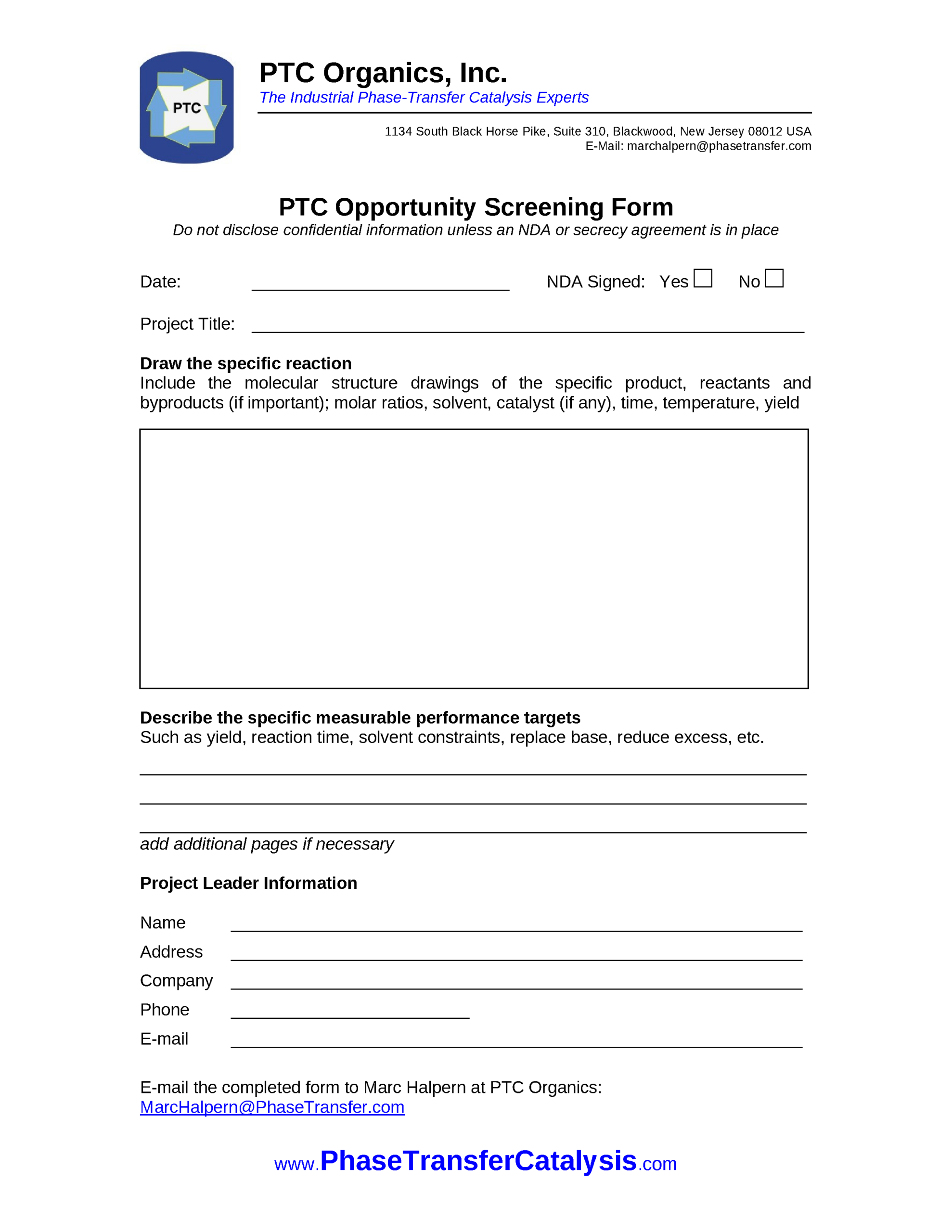
PTC Process Opportunity Screening Form
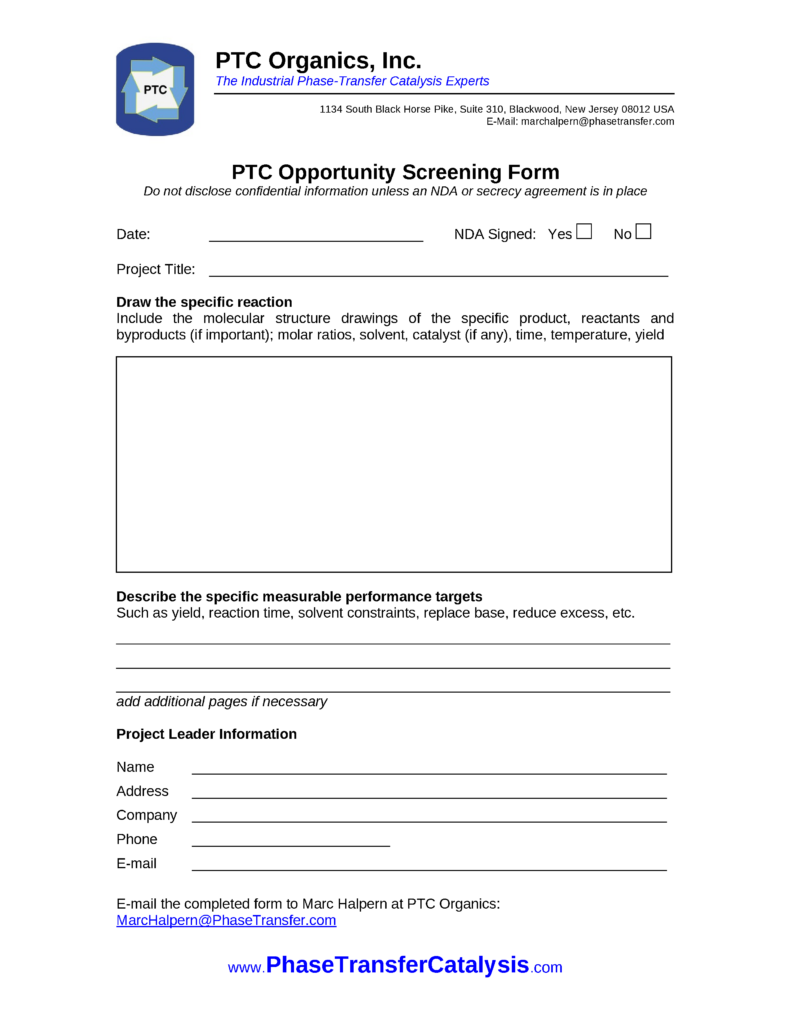
Guidelines for Specific Measurable Performance Targets

Following are guidelines to help you define each desired improvement numerically.

Do not write only “increase yield,” “reduce cycle time,” “reduce cost,” or “improve selectivity.” Define the target. As you define the specific performance targets, first determine the minimum improvement that would justify additional development or process change.

Examples of acceptable targets:

  • increase yield from _______% to at least _______%
  • reduce reaction time from _______ hours to _______ hours
  • reduce excess reagent from _______ equivalents to _______ equivalents
  • replace __________________ base with __________________
  • replace __________________ solvent with __________________
  • reduce impurity __________________ from _______% to below _______%
  • improve selectivity from : to at least :
  • eliminate isolation of intermediate __________________
  • reduce the number of workup unit operations from _______ to _______
  • increase reactor volume productivity from __________________ to __________________

Optional but useful questions to answer internally within your company:

  • What is the expected future production volume?
  • What is the current plant bottleneck?
  • What is the estimated value of yield improvement?
  • What is the estimated value of cycle-time reduction?
  • What is the development timeline?
  • What is the commercial launch timeline?
  • Is this an existing plant process, late-stage development process, or early development route?

Call to Action: Submit a PTC Process Opportunity Screening Form

If your process meets both criteria in the 60-Second PTC Test, the next step is to request an NDA and submit a PTC Process Opportunity Screening Form.

The most useful submissions include actual structures, current process conditions, key limitations, and specific measurable performance targets.

PTC Organics will provide one free initial high / medium / low probability-of-success screen per company for qualified submissions. The purpose of this screen is to help determine whether your reaction deserves further PTC evaluation for the specific process target you define.

If the probability of success is high, and the economic impact is meaningful, then further PTC evaluation may be justified by your company. If the probability of success is low, then the screen may help avoid wasting R&D resources. If the probability of success is medium, then the decision may depend on the size of the potential economic benefit and the strategic importance of the process.

The purpose of this screen is to help determine whether your reaction deserves further PTC evaluation for the specific process target you define. For technical managers, it can also help prioritize constrained process R&D resources by identifying which opportunities have the best combination of probability of success and potential economic value. This form aids, but does not replace, the process R&D manager’s economic screening decision.

Conclusion

The 60-Second PTC Test is a simple tool, but it addresses a serious problem.

Many companies do not miss PTC opportunities because PTC was evaluated and rejected. They miss PTC opportunities because PTC was never properly considered.

If a process needs improved yield, shorter cycle time, lower reagent excess, replacement of strong base, improved selectivity, reduced side reactions, solvent replacement, waste reduction, simpler workup, avoidance of intermediate isolation, or higher productivity AND the reaction belongs to one of the reaction classes where PTC is commonly effective, then the process should be evaluated as a PTC candidate.

For cost-constrained chemical manufacturers, this is not merely an academic exercise.

A properly selected PTC opportunity can reduce cost, improve performance, simplify operations, and increase the value of existing chemical manufacturing assets.

The purpose of the 60-Second PTC Test is not to guarantee success.

The purpose is to identify reactions where the probability of success may be high enough to justify further evaluation.

That is often where major cost-reduction opportunities begin.

Did you already take the 60-Second PTC Test for your current process in development or in production?

Quat Nitrate Outperforms Other Quat Salts in Electrochemical Oxidation

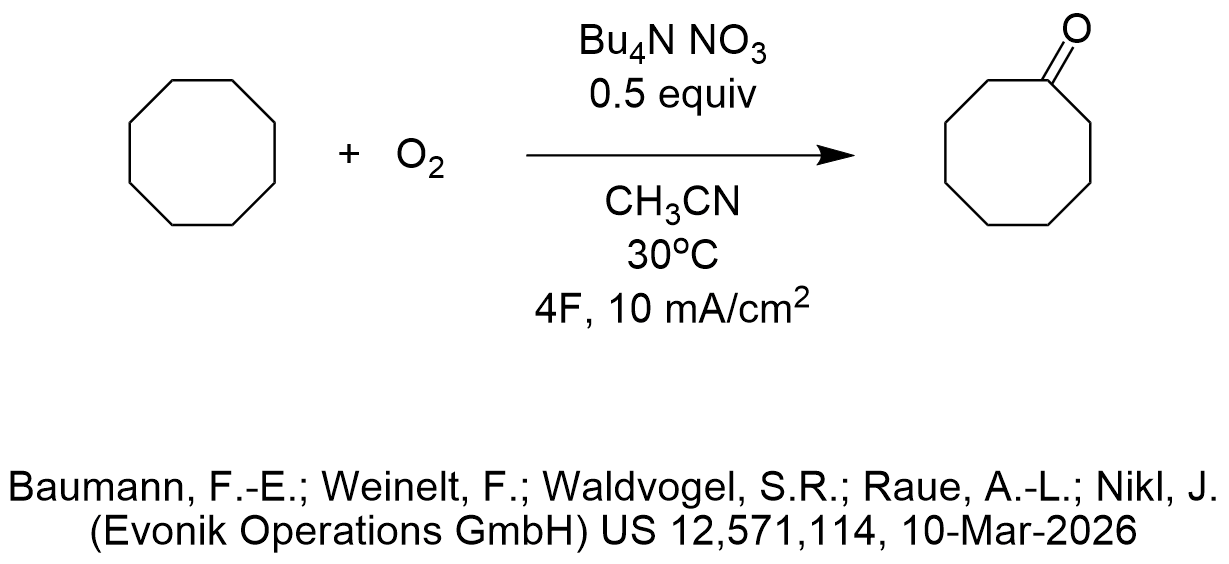
At first glance, tetrabutylammonium nitrate might look like a phase-transfer catalyst, but it isn’t. This is a homogeneous electrochemical oxidation of cyclooctane to cyclooctanone in acetonitrile with oxygen present, and the quaternary ammonium salt is functioning as a supporting electrolyte and nitrate-based mediator, not as a shuttle between phases.

The identity of the anion is more important than the effect of quat structure. Holding the tetrabutylammonium cation constant and changing the anion from NO₃⁻ to BF₄⁻, PF₆⁻, or ClO₄⁻ collapses ketone formation from ~31% to ~3–4%. That is a decisive anion effect and this is not a spectator ion situation.

A PTC chemist will still recognize the logic. Ion identity, ion environment and local organization control the outcome. The difference is that the critical location is no longer a liquid–liquid interface as in classical PTC, but the anodic double layer.

The quat cation effect, while secondary, is still instructive. When nitrate is held constant, methyltrioctylammonium nitrate outperforms tetrabutylammonium nitrate (28% vs 16% under comparable non-optimal conditions). That is not phase transfer. It is microenvironment control at the electrode. A more lipophilic, longer-chain cation may improve substrate colocalization and organizes the interfacial region in a way that favors productive nitrate-mediated oxidation.

So the natural question is: if methyltrioctylammonium nitrate performs better, why did the inventors focus so heavily on tetrabutylammonium salts with different anions?

The most practical explanation is not mechanistic. It is logistical.

Tetrabutylammonium salts are widely available off the shelf in multiple anion forms, are consistent in purity and handling, are well-behaved in electrochemical systems and are easy to swap systematically for anion screening.

In contrast, methyltrioctylammonium salts are less commonly available across a full range of anions (other than chloride), are more hydrophobic and sometimes more variable in quality and are less convenient for a clean, controlled anion comparison study.

In other words, tetrabutylammonium provides a controlled platform for isolating the anion effect, which is clearly the dominant variable in this chemistry. Once that point is established, quat cation optimization becomes a secondary exercise.

There is also an industrial mindset behind this choice. Tetrabutylammonium nitrate is a reasonable baseline: soluble, accessible, and predictable. Even if it is not the absolute best performer, it is a practical benchmark. As process chemists, we start with the robust, commercially available standard, demonstrate the key mechanism and only then decide whether incremental gains from more specialized salts justify the added complexity.

One more point worth noting: the best conditions were not the most aggressive. The highest cyclooctanone yield was obtained at about 20% O₂ in N₂ rather than pure oxygen. That is a reminder that selectivity, control, and safety often align when the system is tuned properly.

In summary, the nitrate anion is doing the chemistry and quat cation is tuning the environment.

The main value of this report lies in the comparative selectivity data rather than in the absolute preparative performance. The patent shows quite clearly that the nitrate anion has a much greater effect on cyclooctanone formation than the identity of the quaternary ammonium cation. When nitrate is replaced by other anions, ketone formation drops sharply, whereas changing the cation while retaining nitrate causes a much smaller change. That is a useful mechanistic and catalyst-selection insight. At the same time, the practical value of the reported oxidation appears limited under the disclosed conditions because the mass balance is poor. A substantial fraction of the starting cyclooctane is converted to unidentified material, so the chemistry is more informative as a selectivity screen than as a demonstrated high-efficiency preparative process.

Stoichiometric Tetrabutylammonium Acetate for Homogeneous Pd-Catalyzed Heck Coupling

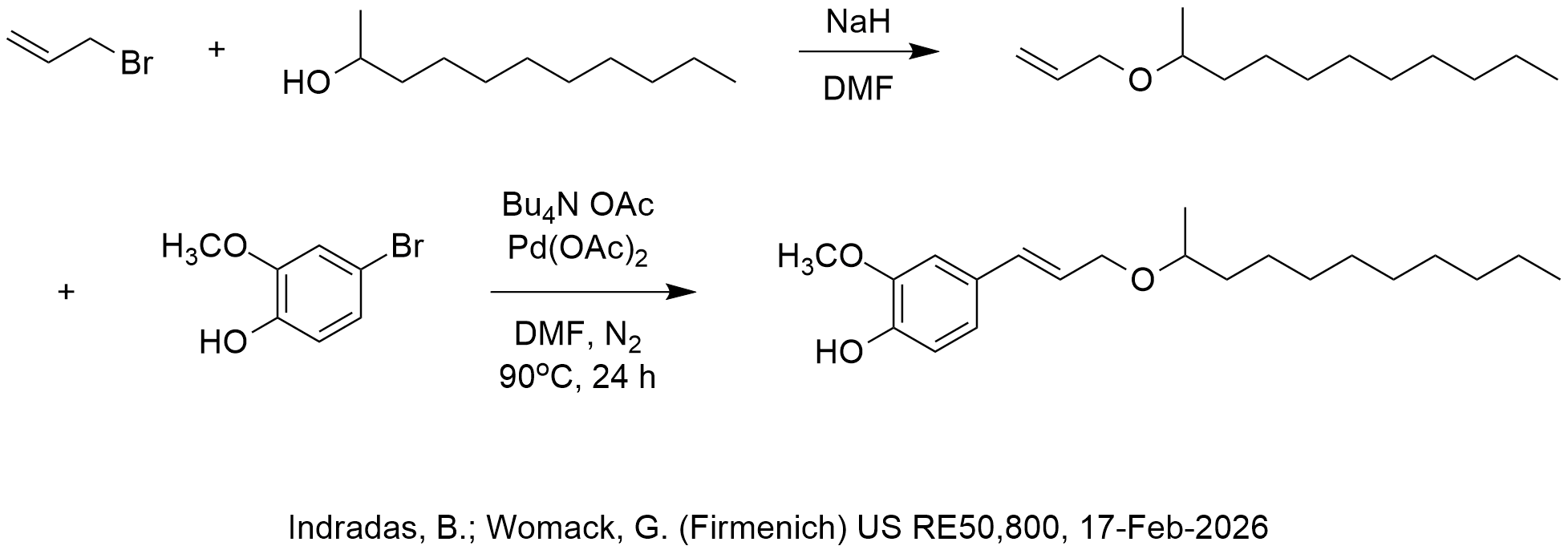
This reissued patent discloses the preparation of cinnamyl ethers via a palladium-catalyzed Heck reaction between aryl halides and allyl ethers derived from perfumery alcohols. The allyl ethers are prepared in a conventional manner for the lab, using sodium hydride in DMF, controlled addition of allyl bromide, aqueous quench, extraction, purification. The resulting allyl ether is then combined with the aryl halide, tetrabutylammonium acetate, and Pd(OAc)₂ in DMF and heated at 90 °C under nitrogen.

The use of stoichiometric tetrabutylammonium acetate in DMF creates a homogeneous system, no inorganic solids, no alkali metal counterions, no heterogeneous buffering effects. From a mechanistic standpoint, acetate is not simply a proton scavenger in Heck chemistry. It serves as a ligand for the palladium and affects the ionic environment around the catalytic center. Replacing sodium or potassium acetate with a lipophilic quat salt removes alkali metal ion pairing from the system and ensures solubility. Whether this improves rate or selectivity is not demonstrated, but the choice of TBA OAc makes sense.

A surprising aspect of this reissued patent from an industrial perspective is the etherification step preceding the Heck reaction. The allyl ethers are prepared using sodium hydride in DMF, an approach that is standard for the lab but usually not optimal for process chemistry. Sodium hydride generates hydrogen, is expensive, requires pyrophoric handling, strictly anhydrous conditions, and solvent choices that are not always preferred in manufacturing environments. It works, it is reliable, it is academically comfortable, but it is not an optimal indusrial option.

Alkylation of alcohols with allyl bromide is one of the most classical of PTC reactions, employing aqueous sodium hydroxide and a quaternary ammonium catalyst that routinely delivers allyl ethers under mild conditions. Such systems eliminate hydride, eliminate hydrogen gas, reduce sensitivity to trace moisture, and simplify workup. The substrates shown in the patent include secondary and somewhat hindered alcohols, but nothing in the patent suggests they are incompatible with PTC-NaOH alkylation chemistry. The inventors do not explore the PTC alternative. They simply apply a homogeneous Williamson protocol.

If one is already comfortable employing tetrabutylammonium salts in the Heck step, it would be natural to at least consider whether a PTC could simplify the upstream etherification.

PTC Oxidation of Alcohols to Aldehydes Using Hydroxy-TEMPO

Over the years, we have reviewed several high-yielding PTC oxidations using catalytic amounts of TEMPO or hydroxy-TEMPO with hypochlorite or other oxidants. Several examples are shown at the end of this post. A patent was issued this month [Velankar, A.; Vaze, K. R.; Shinde, P. D. (S.H. Kelkar and Company Limited), US 12,516,012, 06-Jan-2026], in which the inventors describe the oxidation of a mixture of unsaturated C10 alcohols using hydroxy-TEMPO in the presence of tetrabutylammonium chloride and N-chlorosuccinimide (NCS). The desired unsaturated aldehydes were isolated in 63% yield. While this is a respectable result, the yield is significantly lower than other PTC oxidation systems we reported previously (cited below).

In this system, NCS likely serves as the oxidant, regenerating the active hydroxy-TEMPO species. However, NCS is not a strong oxidant and may not regenerate hydroxy-TEMPO as efficiently as hypochlorite-based systems. This could be one reason for the modest yield. Furthermore, potential losses during workup, including extraction, aqueous washes, and fractional distillation, may also contribute to the reduced isolated yield. It’s possible that the actual conversion is higher, but the isolation method results in losses.

Over-oxidation to the carboxylic acid was not reported but that could potentially be a source of yield loss. However, hydroxy-TEMPO is recognized for its ability to selectively oxidize primary alcohols to aldehydes without significant over-oxidation to carboxylic acids. This level of selectivity is obviously a key advantage for chemists seeking clean, controlled oxidations under mild conditions. Avoiding over-oxidation not only improves product purity, but can also simplify downstream processing and reduce the need for purification steps.

It may be worthwhile for the inventors of this new patent to explore whether the PTC systems we reported (shown below) could offer improvements. The chemistry here is clearly sound, but there could be room for optimization.

For those working in oxidations under phase-transfer conditions, this recent patent is another reminder that even familiar systems like TEMPO oxidations can benefit from revisiting older, well-characterized PTC systems. Depending on the substrate and desired selectivity, combining the right oxidant, the right PTC and the right conditions can make a significant difference.

PTC Reactions with Carbon Disulfide

Over the years, PTC has been used in reactions of carbon disulfide, particularly to form dithiocarbamates in 2-step 1-pot processes.
PTC excels in esterification of carboxylic acids and when the two oxygen atoms are replaced with sulfur, the anion is not only more nucleophilic, the soft nature of the anion (polarizable low charge density) enhances its affinity toward soft quats that helps ion pairing in an activated form.


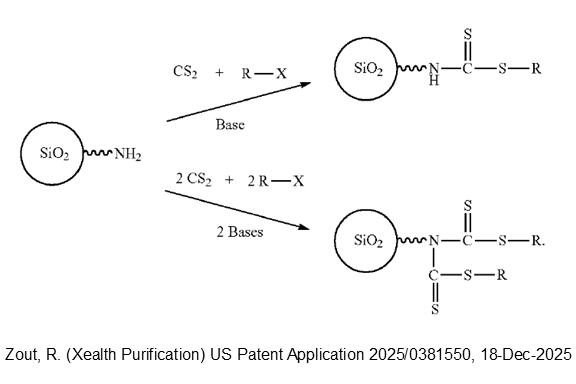
The patent application US 2025/0381550 reports the attack of nucleophiles on CS₂ followed by PTC nucleophilic substitution between the intermediate dithiocarbamate anion and alkylating agents. The application is CS₂ modification of organosilanes.


The inventor is well aware of PTC and dedicates claim 39 to citing about two dozen phase-transfer catalysts, including quaternary ammonium and phosphonium salts. However, in the examples section of the patent application, the inventor does not specify which phase-transfer catalysts were used and does not report yields. So, it’s hard to draw conclusions about efficacy or structure-activity relationships.


Another surprising aspect of the patent application is that the experimental examples do not explicitly include a base. While there are reports in other publications and patents that use PTC with carbon disulfide without base, Claim 37 in this patent application lists about two dozen bases, including alkali metal hydroxides, alkaline earth hydroxides, and related basic reagents that would ordinarily be used to generate nucleophilic species capable of attacking CS₂. Together, these claims describe a conventional and chemically sound PTC framework for CS₂-based transformations. The omission of bases in the examples raises the possibility that the base was simply left out of the example descriptions inadvertently, especially given its prominent role elsewhere in the disclosure. An alternative, more speculative interpretation is that the inventors relied on the less conventional activation mode of CS₂ involving nucleophilic participation of the halide counterion from the quaternary ammonium phase-transfer catalyst, making it more susceptible to attack by amines or other nucleophiles under near-neutral conditions.


So, the absence of reported yields and omission of base in the examples makes it hard to interpret the usefulness of the claimed process. Nevertheless, the broader message of the application remains clear and worth emphasizing: phase-transfer catalysis is a powerful and enabling strategy for promoting reactions of carbon disulfide and justifies publishing this in PTC Tip of the Month, even when the experimental details are lacking.


If your company is developing commercial processes in which carbon disulfide is a raw material for forming dithiocarbamates, you will do your company a service by engaging PTC Organics to help you reduce your development time, achieve better process performance and write patent claims that protect your PTC IP. Now contact Marc Halpern of PTC Organics to inquire about expert industrial process PTC consulting.

Quat Salts for Curing Polymers

In November, there were at least two examples of quats being used as curing catalysts in polymerizations.

In US 12,460,051, quaternary ammonium hydroxides and acetates were employed as moisture-cure catalysts for silicone-based sealants. These salts, including tetrabutylammonium hydroxide, activate silanol condensation without the use of tin or titanium, metals that raise toxicity and environmental flags. Although there’s no phase-transfer catalysis here, the quat salts provide strong base activity, excellent dispersion in organic polymers and a favorable regulatory profile.

In US Patent Application Publication 2025/0353959, tetrabutylammonium acetate was used in polyurethane curing, not for ion transfer or deprotonation, but to improve the properties of the final product. This quat salt catalyzes the isocyanate-polyol reaction with minimal yellowing, outperforming conventional tertiary amine and organotin catalysts in producing low-color, high-transparency polyurethanes. The acetate counterion appears to contribute to reactivity, selectivity and material appearance.

Tribute to Dr. Charles M. Starks – Patriarch of Phase-Transfer Catalysis

Tribute to Dr. Charles M. Starks – Patriarch of Phase-Transfer Catalysis

On September 29, 2025, the scientific community lost one of its most brilliant and humble pioneers with the passing of Dr. Charles M. Starks—the chemist who originated, named, and gave enduring life to phase-transfer catalysis (PTC). Known affectionately to many of us simply as “Charlie,” Dr. Starks changed the course of industrial and academic chemistry with his landmark 1971 paper in the Journal of the American Chemical Society, in which he introduced the PTC concept and the elegant, predictive “Starks Extraction Mechanism.” What makes this contribution so enduring is not just its scientific brilliance, but its disarming simplicity—so intuitive and powerful that it is still taught today in foundational university chemistry courses around the world.

I had the life-changing privilege of meeting Charles in 1987 at a private conference in Silicon Valley organized by Catalytica. That meeting remains one of the defining moments of my professional life. After my presentation, Charles leaned over and shared words with me—private words that I won’t repeat publicly, but that gave me the kind of encouragement one rarely receives in life. From that moment forward, he became a mentor, a model, and, in many ways, a compass for my own work in chemistry. One of the most memorable moments of my professional career was sitting with Dr. Charles Starks and Professor Charles Liotta in the Starks’ apartment in Tulsa, Oklahoma in 1991 when we jointly created “The PTC Rate Matrix” that we have been teaching in our PTC courses over the past 34 years.

Another fond memory that exemplifies the extraordinary ethics of Dr. Starks and Professor Liotta happened in York, United Kingdom in 1995. “Charlie, Charlie and I” were scheduled to present our course on industrial PTC to an audience organized by Trevor Laird of Scientific Update. Our company at that time, “PTC Interface Inc.,” had a training contract with Scientific Update to conduct this PTC course at a certain fixed price. “Charlie and Charlie” arrived at the course venue a few hours before me and when they learned that the attendance was lower than expected, they told Trevor that they would reduce the agreed upon compensation from Scientific Update by two thirds so that Scientific Update would make a profit and Charlie and Charlie would forfeit all compensation for themselves. When I arrived just a few minutes before we went on stage, Charlie and Charlie informed me what they did and they further told me that my share of the compensation would remain whole. I immediately insisted that we distribute the remaining share three ways since we were equal partners and we started presenting a few minutes later.  This is one of many memories that I will always cherish as an honor to have had such a professional relationship with Dr. Charles Starks and Dr. Charles Liotta, who I always looked up to as superstars from the moment I met them both at the 1987 event at Catalytica.

Despite Dr. Starks’ towering accomplishments—over 75 U.S. patents, leadership at Conoco and Vista Chemical, and nominations for the Nobel Prize—Charles was one of the most humble individuals I have ever known. Whether discussing global travels with his wife Virginia or solving dust problems at a local dirt racetrack in Oklahoma, Charles shared stories as if to say: ‘You can do this too.’

Charles’ genius extended well beyond the lab. After retiring, he turned his mind to solving practical and humanitarian problems, such as exploring solutions for global hunger. He consulted for companies large and small—sometimes refusing payment when the cause mattered more than the contract. On my two visits to his home in Ponca City, I saw firsthand the deep respect and affection he inspired in everyone around him. When I attended his 90th birthday celebration last year and Charles and Virginia’s 50th wedding anniversary several years ago, I was told gently not to mention phase-transfer catalysis—not because it didn’t matter, but because Charles and Virginia valued being seen, above all, as real people, not icons. That humility, paired with brilliance, defines his legacy.

On behalf of the global phase-transfer catalysis community: thank you, Charles. Your work and your example will continue to guide us for generations to come.


Post Script 1:

The three most landmark publications in the history of phase-transfer catalysis are MUST-READ pieces of literature, two in J. Amer. Chem. Soc. And one patent. I very strongly encourage you to read all three of these papers/patent in detail if you haven’t done so or if it has been many years since you studied them. Each of these three publications describe amazingly beautiful innovations that are very rarely seen. Now read these absolutely classic papers and patent and you will be very glad you did.

  1. Starks, C. Amer. Chem. Soc., 1971, 93, 195
  2. Starks et al. Amer. Chem. Soc., 1973, 95, 3613
  3. Napier, D.; Starks, C.; (Conoco) 1976, U.S. Patent 3,992,432

Post Script 2:

I interviewed Dr. Starks last year during the celebration of Charles’ and Virginia’s 90th birthday in Ponca City (we sat in their beautiful garden at home…it was magical!). Charles shared some fascinating perspectives on the history of PTC, including the story I never heard before about how an anticipated global hunger led him to the research that resulted in his innovation of the PTC extraction mechanism. Listen to the interview here: http://phasetransfercatalysis.com/ptc_tip/history-of-ptc-interview-with-charles-starks-by-marc-halpern/

Sometimes PTC Needs DMSO


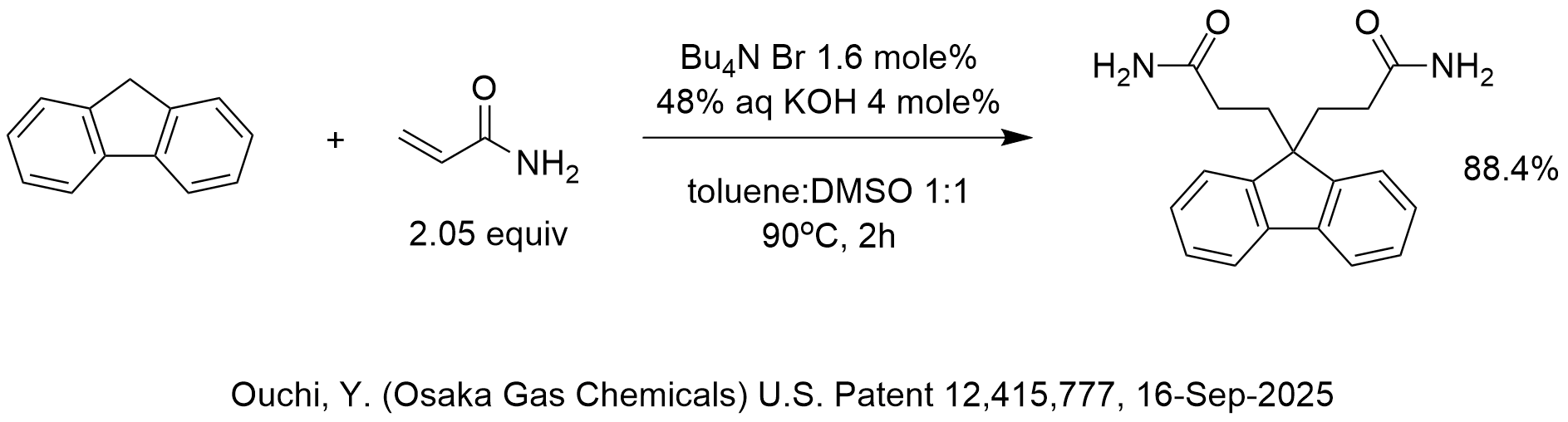
When I formulated the “Halpern pKa Guidelines for the Evaluation and Optimization of New PTC Applications” in the early 1980’s, I used fluorene as the reference point for the upper limit for transition between T-Reaction and I-Reaction. The pKa of fluorene is 23 and is routinely deprotonated by hydroxide under PTC conditions followed by PTC activation of the fluorenyl carbanion as a nucleophile.

PTC is used in commercial C-alkylations of fluorene and the reaction discussed here is an effective PTC Michael Addition with the fluorenyl anion as the nucleophile.

The reaction shown in the diagram is a 1,4-conjugate addition of the fluorenyl anion to the α,β-unsaturated double bond of acrylamide, followed by protonation to yield a β-substituted amide.

We usually recommend performing PTC reactions in non-polar solvents such as toluene or somewhat polar solvents such as MIBK that are immiscible with water in order to facilitate workup. However, acrylamide is not soluble in toluene and apparently not even sufficiently soluble in MIBK. For this reason, the inventors probably had no choice but to use a mixed solvent 50/50 toluene/DMSO.

The reaction uses catalytic 48% KOH (4 mole%) since hydroxide is not consumed. The concentrated KOH promotes effective deprotonation.

Tetrabutylammonium is sufficiently stable under these conditions at 90 deg C for 2 hours to achieve complete conversion. The yield of 88.4% is after workup.

While this reaction may not be remarkable, it does remind us that PTC-hydroxide conditions are very effective for deprotonating organic substrates with acidic C-H groups that are many orders of magnitude less acidic than water (pKa 15.7), which is the conjugate acid of hydroxide and then activate the resulting carbanion to perform nucleophilic attack in high yield.

Marc Halpern has 49 years of practical experience in PTC-hydroxide reactions. If your company needs to achieve low-cost high-performance green chemistry reactions using strong base, now contact Marc Halpern of PTC Organics to determine if you can improve your R&D efficiency developing such processes.