
Tribute to Dr. Charles M. Starks – Patriarch of Phase-Transfer Catalysis
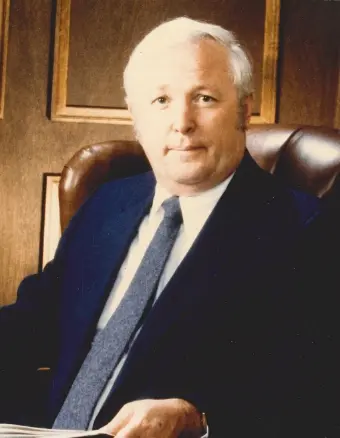
On September 29, 2025, the scientific community lost one of its most brilliant and humble pioneers with the passing of Dr. Charles M. Starks—the chemist who originated, named, and gave enduring life to phase-transfer catalysis (PTC). Known affectionately to many of us simply as “Charlie,” Dr. Starks changed the course of industrial and academic chemistry with his landmark 1971 paper in the Journal of the American Chemical Society, in which he introduced the PTC concept and the elegant, predictive “Starks Extraction Mechanism.” What makes this contribution so enduring is not just its scientific brilliance, but its disarming simplicity—so intuitive and powerful that it is still taught today in foundational university chemistry courses around the world.
I had the life-changing privilege of meeting Charles in 1987 at a private conference in Silicon Valley organized by Catalytica. That meeting remains one of the defining moments of my professional life. After my presentation, Charles leaned over and shared words with me—private words that I won’t repeat publicly, but that gave me the kind of encouragement one rarely receives in life. From that moment forward, he became a mentor, a model, and, in many ways, a compass for my own work in chemistry. One of the most memorable moments of my professional career was sitting with Dr. Charles Starks and Professor Charles Liotta in the Starks’ apartment in Tulsa, Oklahoma in 1991 when we jointly created “The PTC Rate Matrix” that we have been teaching in our PTC courses over the past 34 years.
Another fond memory that exemplifies the extraordinary ethics of Dr. Starks and Professor Liotta happened in York, United Kingdom in 1995. “Charlie, Charlie and I” were scheduled to present our course on industrial PTC to an audience organized by Trevor Laird of Scientific Update. Our company at that time, “PTC Interface Inc.,” had a training contract with Scientific Update to conduct this PTC course at a certain fixed price. “Charlie and Charlie” arrived at the course venue a few hours before me and when they learned that the attendance was lower than expected, they told Trevor that they would reduce the agreed upon compensation from Scientific Update by two thirds so that Scientific Update would make a profit and Charlie and Charlie would forfeit all compensation for themselves. When I arrived just a few minutes before we went on stage, Charlie and Charlie informed me what they did and they further told me that my share of the compensation would remain whole. I immediately insisted that we distribute the remaining share three ways since we were equal partners and we started presenting a few minutes later. This is one of many memories that I will always cherish as an honor to have had such a professional relationship with Dr. Charles Starks and Dr. Charles Liotta, who I always looked up to as superstars from the moment I met them both at the 1987 event at Catalytica.
Despite Dr. Starks’ towering accomplishments—over 75 U.S. patents, leadership at Conoco and Vista Chemical, and nominations for the Nobel Prize—Charles was one of the most humble individuals I have ever known. Whether discussing global travels with his wife Virginia or solving dust problems at a local dirt racetrack in Oklahoma, Charles shared stories as if to say: ‘You can do this too.’
Charles’ genius extended well beyond the lab. After retiring, he turned his mind to solving practical and humanitarian problems, such as exploring solutions for global hunger. He consulted for companies large and small—sometimes refusing payment when the cause mattered more than the contract. On my two visits to his home in Ponca City, I saw firsthand the deep respect and affection he inspired in everyone around him. When I attended his 90th birthday celebration last year and Charles and Virginia’s 50th wedding anniversary several years ago, I was told gently not to mention phase-transfer catalysis—not because it didn’t matter, but because Charles and Virginia valued being seen, above all, as real people, not icons. That humility, paired with brilliance, defines his legacy.
On behalf of the global phase-transfer catalysis community: thank you, Charles. Your work and your example will continue to guide us for generations to come.
Post Script 1:
The three most landmark publications in the history of phase-transfer catalysis are MUST-READ pieces of literature, two in J. Amer. Chem. Soc. And one patent. I very strongly encourage you to read all three of these papers/patent in detail if you haven’t done so or if it has been many years since you studied them. Each of these three publications describe amazingly beautiful innovations that are very rarely seen. Now read these absolutely classic papers and patent and you will be very glad you did.
- Starks, C. Amer. Chem. Soc., 1971, 93, 195
- Starks et al. Amer. Chem. Soc., 1973, 95, 3613
- Napier, D.; Starks, C.; (Conoco) 1976, U.S. Patent 3,992,432
Post Script 2:
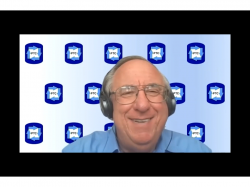
I interviewed Dr. Starks last year during the celebration of Charles’ and Virginia’s 90th birthday in Ponca City (we sat in their beautiful garden at home…it was magical!). Charles shared some fascinating perspectives on the history of PTC, including the story I never heard before about how an anticipated global hunger led him to the research that resulted in his innovation of the PTC extraction mechanism. Listen to the interview here: https://phasetransfercatalysis.com/ptc_tip/history-of-ptc-interview-with-charles-starks-by-marc-halpern/